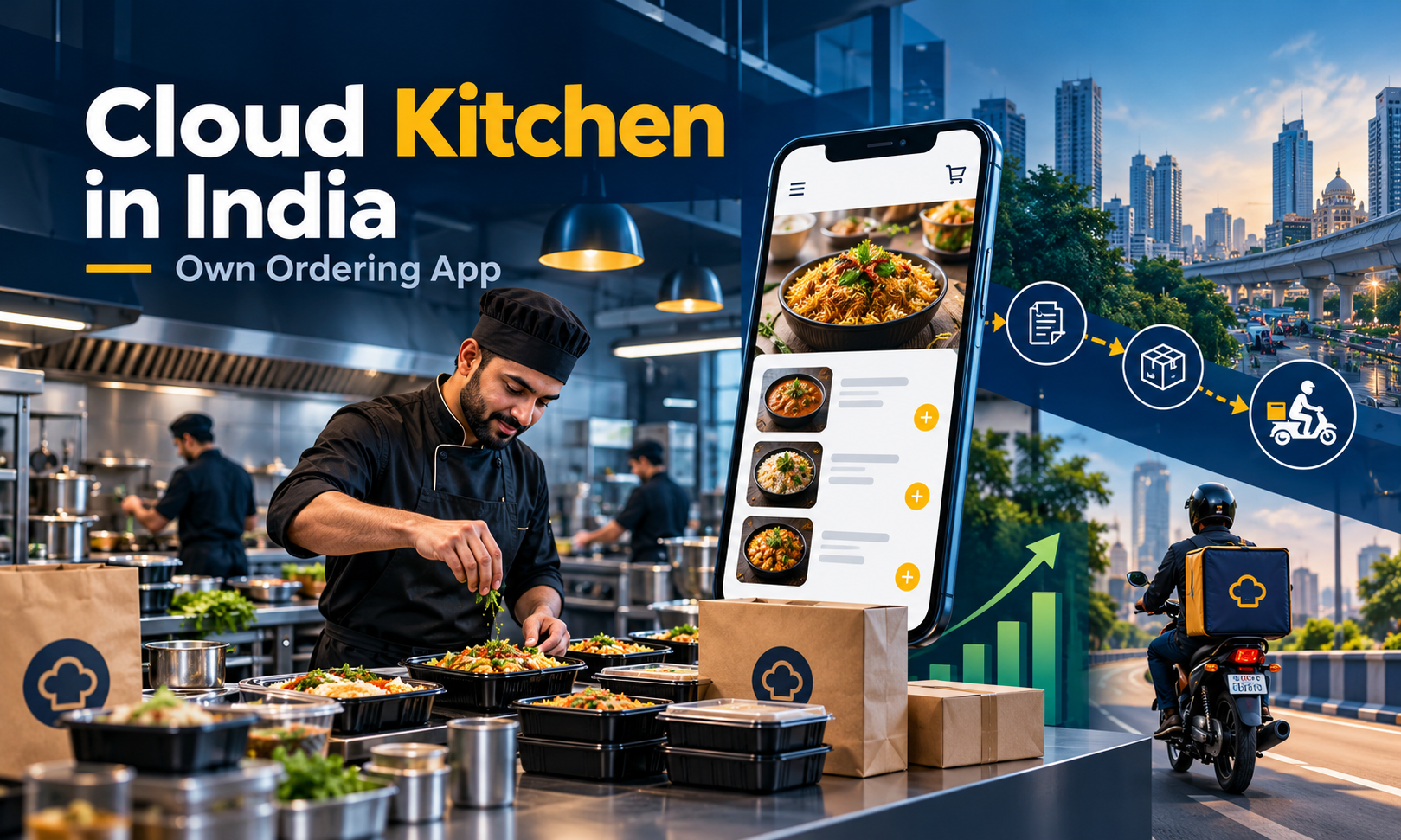

There was a time when opening a restaurant meant finding a busy commercial street, investing in attractive interiors, buying furniture and waiting for customers to walk in. Today, a food business can start behind a modest kitchen door and reach hundreds of nearby customers through their smartphones.
That is the working idea behind a cloud kitchen. No dining tables, no elaborate reception area and no expensive restaurant interiors. The kitchen prepares food, customers place orders online, and delivery partners carry those meals to their doorsteps.
But here is something many first-time food entrepreneurs overlook: opening a cloud kitchen and building a profitable cloud kitchen are two entirely different challenges.
Preparing delicious food is only half the job. The remaining half involves controlling expenses, managing orders, choosing the right delivery model and creating a reliable way for customers to order again.
This is where having your own food ordering website or mobile application can make a genuine business difference. Instead of depending entirely on third-party food delivery platforms, your kitchen can gradually build its own direct customer base.
In this guide, we will explore how to start a cloud kitchen business in India, the approximate investment required, essential licences, operational decisions and how a dedicated ordering app can support long-term business growth.
What Exactly Is a Cloud Kitchen Business?
A cloud kitchen, also called a ghost kitchen or delivery-only kitchen, is a commercial food preparation facility that serves customers primarily through online orders rather than a traditional dine-in restaurant.
Customers browse the menu, choose their food, make payments and receive deliveries at their preferred addresses. The kitchen handles cooking, packaging and dispatch without maintaining a conventional restaurant dining area.
For example, imagine a small kitchen in JP Nagar, Bangalore, specialising in North Indian meals. Instead of renting an expensive restaurant property on a main road, the owner operates from a suitable commercial kitchen and delivers food to customers within a defined service area.
The kitchen might accept orders through:
- Third-party food delivery platforms such as Swiggy and Zomato.
- Its own branded food ordering mobile application.
- A dedicated online ordering website.
- WhatsApp, telephone or direct customer enquiries.
- Corporate meal subscriptions and scheduled food deliveries.
The concept appears straightforward. However, what happens between receiving an order and delivering a hot meal determines whether customers will return.
Why Cloud Kitchens Are an Interesting Business Opportunity in India
India's urban food culture has changed considerably. Working professionals, college students, young families and people living away from their hometowns frequently look for convenient meal options.
In cities such as Bangalore, Hyderabad, Pune, Mumbai and Delhi, a delivery-focused kitchen can serve customers without requiring expensive storefront visibility.
Lower Initial Infrastructure Costs
A cloud kitchen generally avoids expenditure on dining furniture, restaurant decoration, large customer-facing spaces and extensive service staff. This allows entrepreneurs to concentrate more of their investment on food preparation, equipment, hygiene and delivery operations.
Freedom to Experiment with Food Concepts
A kitchen can experiment with specialised offerings such as millet meals, regional thalis, healthy lunch boxes, biryani, bakery products or late-night snacks. Menu changes can be tested without redesigning an entire restaurant.
Opportunity to Serve Multiple Customer Groups
A single kitchen may supply regular meals to office employees, evening snacks to nearby residents and weekend family packs, provided the kitchen has sufficient capacity and maintains consistent food quality.
Online Ordering Makes Expansion More Practical
A kitchen can introduce digital ordering, online payments, scheduled deliveries and customer loyalty offers without necessarily expanding its physical space immediately.
However, lower setup costs do not automatically mean higher profits. Food wastage, platform charges, delivery expenses and excessive discounts can consume the earnings of even a busy kitchen.
Step 1: Choose a Food Concept Before Investing in Equipment
One of the biggest mistakes in the cloud kitchen business is attempting to sell every popular food item from the first day.
A kitchen offering biryani, pizza, Chinese food, South Indian breakfast, burgers and desserts may sound attractive on paper. In practice, such a menu creates inventory complications, increases wastage and makes food consistency difficult.
Instead, begin with a clear food identity.
Popular Cloud Kitchen Concepts Worth Exploring
- Homestyle Meals: Everyday lunch and dinner options for working professionals, bachelors and students.
- Regional Food: Specialised Andhra meals, Karnataka dishes, Kerala cuisine, Bengali food or other regional specialities.
- Healthy Food: Balanced meal boxes, millet-based preparations, salads and protein-focused menus.
- Biryani and Rice Bowls: Focused menus built around a core rice preparation with manageable variations.
- Breakfast Kitchens: Idli, dosa, poori, upma and regional breakfast combinations.
- Office Meal Subscriptions: Pre-booked lunch packages for employees, offices and small organisations.
- Bakery and Desserts: Cakes, brownies, cookies and occasion-based dessert orders.
Do not choose a concept merely because it is trending. Check ingredient availability, preparation time, repeat-order frequency, local competition and whether the food remains enjoyable after travelling for 20 to 30 minutes.
A dish that tastes wonderful immediately after cooking may become disappointing after being packed inside a delivery container. That small detail can decide the reputation of your entire business.
Step 2: Study Your Neighbourhood, Not Just the City
Cloud kitchens are often hyperlocal businesses. A kitchen does not necessarily need to attract customers from across Bangalore. It needs to become a reliable food option within its realistic delivery radius.
Before finalising a location, study the neighbourhood carefully.
- Are there apartments, paying guest accommodations or office buildings nearby?
- What types of food are already available in the area?
- Which price ranges appear frequently on competing menus?
- Are customers likely to order breakfast, lunch, dinner or late-night snacks?
- Can delivery executives reach surrounding areas without lengthy traffic delays?
- Does the locality have sufficient commercial kitchen infrastructure?
Consider Bangalore as an example. A kitchen near Electronic City may explore office lunch subscriptions, while one operating around student accommodation could investigate affordable meal combos. A residential locality might generate interest in family dinner packs and weekend food orders.
These are possibilities to validate, not guaranteed demand patterns.
Start by analysing a manageable service radius, such as 3 to 5 kilometres, depending on local traffic, rider availability and food travel quality. A smaller and dependable service area is often better than promising deliveries across an entire city.
Step 3: Calculate Your Cloud Kitchen Startup Cost in India
How much money is required to start a cloud kitchen in India?
There is no single answer. A small kitchen using an existing permitted facility will have very different expenses from a professionally equipped operation in a rented commercial property.
For initial planning, the following figures illustrate a modest single-location commercial cloud kitchen setup.
Estimated Initial Investment
- Kitchen deposit and initial rent: ₹40,000 to ₹1,50,000.
- Cooking equipment and utensils: ₹70,000 to ₹2,00,000.
- Refrigeration, storage and ventilation: ₹30,000 to ₹1,00,000.
- Initial ingredients and packaging stock: ₹20,000 to ₹50,000.
- Registrations, professional assistance and miscellaneous setup: ₹10,000 to ₹40,000.
- Brand identity, menu photography and initial marketing: ₹15,000 to ₹50,000.
- Working capital reserve: ₹75,000 to ₹2,00,000.
Illustrative total investment: approximately ₹2.6 lakh to ₹7.8 lakh.
These are planning assumptions, not verified market quotations. Actual investment can be lower when using a shared kitchen and considerably higher when extensive renovation, premium equipment or larger staffing is required. Custom mobile app development should be budgeted separately.
Do not spend the entire budget before receiving your first order. Keep enough cash available to purchase ingredients, pay staff, handle unexpected repairs and maintain operations during the initial months.
Step 4: Complete the Necessary Licences and Registrations
Food safety and legal compliance must be addressed before commencing commercial operations. The exact permissions depend on your location, premises, business structure and activities.
FSSAI Registration or Licence
Food businesses in India generally require FSSAI registration or licensing, as applicable to their operations.
Under the revised turnover thresholds effective from 1 April 2026, the general categories for new applications are:
- FSSAI Registration: Annual turnover up to ₹1.5 crore.
- State Licence: Annual turnover above ₹1.5 crore and up to ₹50 crore.
- Central Licence: Annual turnover above ₹50 crore.
Other eligibility criteria may apply to particular activities, capacities or business models. If an ordering platform also operates as a food e-commerce intermediary, additional FSSAI requirements may need evaluation.
Applicants should verify the appropriate category using the official FSSAI FoSCoS portal.
GST Registration
GST registration depends on applicable turnover thresholds, the nature of supplies and the business's operating model. Orders processed through third-party e-commerce operators may have a different GST treatment from orders accepted directly by the restaurant.
For example, restaurant services supplied through certain e-commerce operators fall under special GST provisions where the operator is responsible for paying the applicable tax. This arrangement should not be assumed to apply automatically to a kitchen's independently operated ordering app.
Consult a qualified tax professional before implementing GST calculations, invoicing and payment settlement in your ordering system.
Local Business and Premises Permissions
Depending on the kitchen's location and setup, additional requirements may include:
- Municipal trade permissions applicable to the premises.
- Karnataka Shops and Commercial Establishments compliance, where applicable.
- Fire safety approvals or clearances where legally required.
- Commercial LPG, building-use and ventilation requirements.
- Waste disposal, hygiene and other local operational requirements.
For a kitchen in Bangalore, verify the current municipal jurisdiction and applicable local rules before signing a long-term rental agreement. A low-rent property is not a bargain if commercial cooking is not permitted there.
Step 5: Set Up a Kitchen Built for Fast Order Movement
A cloud kitchen is not simply a restaurant kitchen without chairs. Its internal arrangement should support continuous preparation, packaging and dispatch.
Think of the kitchen as a production line where ingredients enter at one end and properly packed customer orders leave at the other.
A practical arrangement should provide separate or clearly managed spaces for:
- Ingredient receiving and checking.
- Dry, chilled and frozen storage.
- Vegetable cleaning and ingredient preparation.
- Cooking and final food assembly.
- Packaging and order verification.
- Pickup and handover to delivery personnel.
Maintain clear hygiene procedures, safe food storage temperatures, allergen controls, staff cleanliness and appropriate separation of raw and ready-to-eat foods.
During busy hours, even a simple order identification system can prevent costly errors. Every package should be matched with its correct order before dispatch.
Step 6: Design a Menu That Works Financially
A popular dish is not necessarily a profitable dish.
Before deciding menu prices, calculate the actual cost of preparing and delivering each product. Include ingredients, oil, spices, packaging, wastage and applicable order-related charges.
For instance, consider a rice bowl priced at ₹199.
- Ingredients: ₹62.
- Packaging: ₹14.
- Payment processing: ₹5.
- Kitchen variable overhead allocation: ₹12.
- Delivery expense borne by the kitchen: ₹35.
The combined illustrative variable expense is ₹128, leaving ₹71 as contribution before fixed expenses, marketing, applicable taxes and other costs.
If the same order attracts a substantial third-party platform commission, its remaining contribution may be much smaller.
This is one reason direct ordering channels deserve attention. However, direct delivery and customer acquisition also cost money, so the correct comparison is the total cost of fulfilling each order, not simply the commission percentage.
Keep the First Menu Manageable
Begin with a focused collection of dishes that share ingredients wherever practical. This makes purchasing easier, reduces preparation complexity and limits food wastage.
Introduce add-ons such as beverages, desserts, extra sides and family-size portions only when they fit the production process and offer genuine value to customers.
Step 7: Decide How Customers Will Place Their Orders
This is one of the most consequential decisions in a cloud kitchen business.
Food delivery marketplaces are useful for attracting customers who are already searching for meals. They provide discovery, ordering infrastructure and access to delivery networks, subject to their commercial terms.
However, building a business entirely around outside platforms can create certain limitations.
- Commissions and promotional expenses can affect order profitability.
- The kitchen may have limited control over customer relationships.
- Customers may remember the ordering platform more than the food brand.
- Ranking, visibility and promotional rules can change.
- Repeat customers may continue ordering through the marketplace rather than directly.
A sensible approach is not necessarily to abandon third-party platforms. Instead, use them for customer discovery while establishing your own direct ordering channel.
Your branded ordering website or app then becomes another sales route where customers can browse your menu, place repeat orders and interact directly with your business.
Why Having Your Own Cloud Kitchen Ordering App Makes Business Sense
Consider this situation: a customer orders lunch from your kitchen, enjoys the food and wants to order the same meal again next week.
Without a direct ordering channel, the customer may have to search for your brand again on a food marketplace. With your own app, they could open your branded platform, view previous orders and reorder within a few taps.
That is the real value of owning your digital ordering channel: making the second, third and tenth purchase easier.
Direct Customer Relationships
Customers can create accounts, save delivery addresses, view their order history and contact the kitchen directly. Your business can manage these interactions while respecting privacy requirements and customer communication preferences.
Greater Control Over Pricing and Promotions
You can introduce direct-order offers, family meal bundles, referral rewards, scheduled meal packages and promotional campaigns without relying entirely on marketplace promotions.
Better Understanding of Repeat Purchases
A properly developed ordering application can help identify frequently ordered dishes, popular ordering hours, repeat purchase patterns and demand across delivery zones.
A Recognisable Food Brand
A branded app allows your business to maintain a consistent identity across menu images, order notifications, packaging, offers and customer communication.
There is an important limitation: customers will not automatically install a new app simply because a kitchen has launched one. The application needs a clear reason to be used, such as easier repeat orders, useful subscription plans, reliable delivery or meaningful direct-order benefits.
Step 8: Develop a Food Ordering App with the Right Features
A cloud kitchen ordering application should be straightforward for customers and practical for the kitchen team.
Adding dozens of complicated features from the beginning can increase development costs without improving daily operations. A good starting point is a focused system with customer ordering, kitchen administration, payment processing and delivery coordination.
Essential Customer App Features
- Mobile Login: Customer registration and secure OTP-based login.
- Digital Menu: Food categories, item descriptions, images, prices and availability.
- Cart and Checkout: Add dishes, customise options where supported and review the final bill.
- Delivery Address: Save addresses and check whether delivery is available in the selected area.
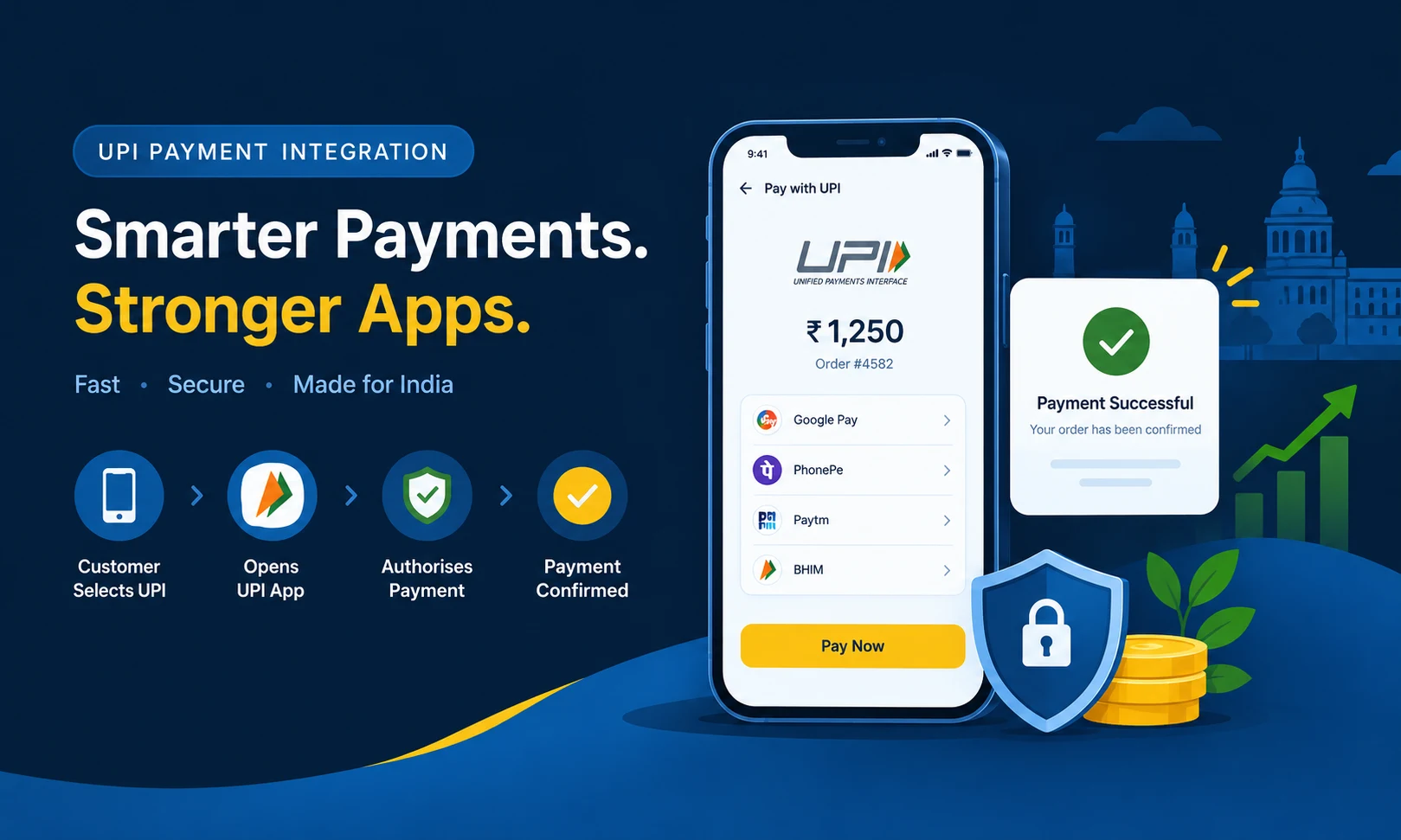
- Online Payments: UPI, cards and other supported payment methods through a payment gateway.
- Order Status: Display order received, accepted, preparing, ready, dispatched and delivered stages.
- Previous Orders: Easy access to order history and repeat ordering.
- Offers: Coupon codes, limited-time discounts and customer rewards.
- Notifications: Order confirmation, important status updates and permitted promotional communication.
- Customer Support: A simple way to raise order-related concerns.
Essential Kitchen Admin Panel Features
- Secure administrator login with appropriate access controls.
- Dashboard showing new, ongoing and completed orders.
- Menu item, category and price management.
- Option to mark dishes unavailable when ingredients run out.
- Order acceptance, preparation and dispatch controls.
- Delivery zone and delivery charge management.
- Discount code and promotional offer management.
- Customer and order history records.
- Sales reports, payment records and refund tracking.
- Configurable kitchen opening hours and temporary order suspension.
Delivery Management Features
If the kitchen handles its own deliveries, the system can also include rider assignment, pickup confirmation, delivery status and proof-of-delivery options.
Live GPS tracking may be useful for larger delivery operations, but it is not essential for every small kitchen's first launch.
For a single-location kitchen, a customer ordering application and a practical web-based admin panel may be sufficient initially.
If you are evaluating a branded ordering system, W3 Dream Solutions offers custom mobile app development services in Bangalore for businesses looking to build applications around their own ordering process and operational requirements.
Step 9: Choose Between Android, iOS and Web Ordering
Not every cloud kitchen needs to launch an Android app, an iPhone app and a separate ordering website simultaneously.
For a new business, the better decision depends on available investment, customer behaviour and expected order volume.
Option 1: Mobile-Friendly Ordering Website
A responsive ordering website can be a practical starting point. Customers can open a link, browse the menu and place orders without installing anything.
This is particularly useful for orders coming from Google Search, social media campaigns and WhatsApp.
Option 2: Android Ordering App
An Android app may be useful when your target customers are comfortable installing an application and have a clear reason to order repeatedly.
It can support saved preferences, account access, order history and notifications.
Option 3: Android and iOS Applications
Businesses aiming to serve customers across both major mobile operating systems can consider developing Android and iOS apps, including cross-platform options where technically suitable.
Regardless of the customer-facing platform, the admin system should provide a central place to manage menus, availability, orders and payments.
The key is to build the smallest reliable system that solves an actual operational problem, then expand it as customer demand becomes clearer.
Step 10: Plan Your Food Delivery Operations
Receiving orders digitally is only the beginning. Every order still needs to travel from your kitchen to the customer's doorstep.
Broadly, there are three delivery approaches.
Own Delivery Staff
The kitchen hires riders and manages deliveries internally. This provides greater operational control but introduces staffing, vehicle, scheduling and route management responsibilities.
Third-Party Delivery Partners
The business may work with external delivery providers, subject to their service coverage, integration options and commercial terms.
Hybrid Delivery
The kitchen uses its own riders for nearby or high-frequency orders and external partners for other eligible deliveries.
Before promising delivery times, test the entire process during normal and peak traffic conditions.
A kitchen that prepares a meal in 12 minutes may still need 35 to 45 minutes to deliver it when packaging, rider assignment, pickup and traffic are considered.
Customers generally prefer a realistic delivery estimate over an attractive promise that is repeatedly missed.
Step 11: Introduce Meal Subscriptions and Scheduled Ordering
One-time orders are valuable, but regular customers can make demand more predictable.
Consider a professional who orders lunch from Monday to Friday. Instead of placing a new order every afternoon, the customer could subscribe to a weekly or monthly meal plan.
A cloud kitchen serving offices, hostels, apartments or paying guest accommodations may find scheduled meals particularly useful.
A subscription feature could allow customers to:
- Choose a weekly or monthly meal package.
- Select vegetarian or other available menu preferences.
- Specify preferred delivery days and times.
- Pause a scheduled delivery before a defined cutoff.
- View their upcoming meals and payment records.
- Renew or modify subscriptions based on the kitchen's policies.
For the kitchen, advance schedules can improve purchase planning and help estimate daily preparation quantities. However, subscriptions also create obligations around reliable service, cancellations, refunds and menu consistency.
Start with simple scheduled orders before investing in a more complicated recurring billing system.
Step 12: Calculate Whether Your Cloud Kitchen Can Become Profitable
Revenue figures can create excitement, but contribution per order tells a more useful story.
Consider an illustrative kitchen completing 50 orders daily at an average order value of ₹250.
- Daily order revenue: ₹12,500.
- Monthly order revenue at 30 operating days: ₹3,75,000.
- Illustrative variable cost at ₹165 per order: ₹2,47,500 monthly.
- Contribution before fixed expenses: ₹1,27,500 monthly.
Now assume the kitchen has monthly fixed expenses of ₹1,00,000 covering rent, fixed staffing, utilities and other overheads not already included in variable costs.
The illustrative operating surplus would be ₹27,500 before income tax, depreciation, financing costs and other exclusions.
This is a calculation example, not an industry profitability claim or earnings guarantee.
Understand Your Break-Even Order Count
Using the same example:
Contribution per order = ₹250 - ₹165 = ₹85.
Monthly break-even order count = ₹1,00,000 / ₹85 = approximately 1,177 orders.
Across 30 operating days, the kitchen would need approximately 40 orders per day to cover the assumed fixed costs.
The important lesson is that a kitchen with fewer profitable orders may perform better financially than one generating higher sales through deep discounts and expensive delivery arrangements.
Can Your Own Ordering App Reduce Cloud Kitchen Expenses?
Potentially, yes. But only when direct ordering is supported by sensible customer acquisition and delivery economics.
Suppose a third-party platform charges a hypothetical commission of 22% on the relevant order value. On an order worth ₹300, this represents ₹66 before considering other applicable charges or taxes.
A direct order could avoid that particular marketplace commission. However, the kitchen may still pay for payment processing, delivery, customer support, promotional offers, app maintenance and marketing.
For example, if a direct order incurs ₹8 in payment charges and ₹40 in delivery costs, the kitchen spends ₹48 on those two items alone.
The actual saving depends on which costs the marketplace ordinarily covers, the delivery fees collected from customers and the cost of attracting each direct order.
Also remember that your ordering app is a business investment. Its development and maintenance costs should be considered when evaluating overall savings.
The strongest financial argument for a direct ordering application usually comes from repeat business. If existing customers can order again at a lower acquisition cost, the economics can become more attractive over time.
Step 13: Promote Your Cloud Kitchen Within Your Delivery Area
A cloud kitchen does not need customers from every corner of a city. It needs enough customers within the areas it can serve consistently.
That makes neighbourhood-focused marketing particularly useful.
Create a Recognisable Local Identity
Choose a memorable food brand, use appetising but accurate food photography, and maintain consistent packaging and menu descriptions.
Make the kitchen name easy to recognise across online profiles, delivery platforms and your direct ordering website.
Build a Local Search Presence
Where eligible under Google's current business profile rules, establish an accurate local business presence. Businesses without customer-facing storefronts should represent their address and service areas appropriately.
A branded website can also target relevant searches such as home-style lunch delivery in a particular Bangalore neighbourhood or weekly office meals in a defined service area.
Use Instagram and Short Food Videos
Show actual cooking processes, packaging, signature dishes and behind-the-scenes preparation. Original kitchen footage can communicate food quality better than generic stock photographs.
Encourage Direct Repeat Ordering
Include a clearly printed website address or QR code on packaging that leads to your branded ordering page, while following applicable marketplace agreements and promotion rules.
Give returning customers a practical reason to order directly, whether through easier checkout, meal subscriptions, exclusive menu packs or predictable service.
Explore Nearby Business Partnerships
Contact nearby offices, apartment communities and organisations that may require regularly scheduled meals. Small recurring group orders can be more manageable than unpredictable, widely scattered delivery requests.
Common Cloud Kitchen Mistakes That Can Become Expensive
A cloud kitchen can struggle despite good recipes and enthusiastic customer reviews. Most operational problems begin with small decisions that appear harmless during the planning stage.
- Starting with an oversized menu: Too many dishes create ingredient wastage and slow preparation.
- Ignoring platform deductions: Sales reports may look impressive while actual contribution remains weak.
- Choosing rent over practicality: An unsuitable kitchen location can create licensing, infrastructure and delivery problems.
- Promising unrealistic delivery times: Repeated delays discourage returning customers.
- Using poor packaging: Leakage, sogginess or temperature loss can damage customer satisfaction.
- Launching an app without promotion: Developing an application does not automatically generate downloads or orders.
- Offering excessive discounts: Customers attracted only by discounts may not return at normal prices.
- Neglecting food safety: Hygiene failures can create serious customer and regulatory consequences.
- Failing to measure repeat orders: Without retention data, the business cannot easily understand whether customers genuinely like the experience.
Keep reviewing food cost, rejected orders, complaints, preparation time, delivery performance and customer repeat frequency. Small operational corrections made early can prevent much larger losses later.
How to Launch Your Cloud Kitchen in the First 90 Days
Rather than committing all resources at once, divide the business launch into manageable stages.
Days 1 to 30: Validate the Business
- Choose the cuisine and customer segment.
- Study competition and delivery feasibility in the selected locality.
- Prepare an initial menu and calculate dish-level costs.
- Identify a suitable kitchen and verify licensing requirements.
- Prepare the startup budget and working capital plan.
Days 31 to 60: Build the Operating System
- Set up kitchen equipment and food safety procedures.
- Finalise suppliers, recipes, packaging and staffing.
- Configure the digital menu, payments and order management process.
- Test the ordering website or app and kitchen administration system.
- Carry out trial deliveries to nearby addresses.
Days 61 to 90: Launch, Measure and Correct
- Begin accepting orders within a controlled delivery area.
- Observe preparation delays and delivery bottlenecks.
- Collect feedback on taste, portions and packaging.
- Remove consistently underperforming menu items.
- Promote direct repeat orders and measure customer retention.
- Review profitability before increasing delivery coverage.
This 90-day outline is an illustrative planning framework. Actual timelines depend on premises readiness, approvals, staffing, development scope and operational complexity.
Building a Cloud Kitchen Ordering App with W3 Dream Solutions
A food ordering app works best when it reflects how the kitchen actually operates.
A single-outlet meal delivery business may need simple menu management and quick order acceptance, while a growing food brand may require multiple kitchens, service-area restrictions, scheduled orders, subscription handling and more advanced reporting.
Using the same feature-heavy application for every food business can introduce unnecessary expense and complexity.
W3 Dream Solutions, a website and mobile application development company based in Bangalore, works on custom digital applications for business requirements.
For a cloud kitchen, a custom-developed ordering platform can be planned around practical needs such as:
- Branded Android and iOS customer applications.
- Mobile-responsive food ordering websites.
- Menu and product availability management.
- Secure customer authentication and online payments.
- Kitchen order processing and administrative dashboards.
- Delivery management and location-based service restrictions.
- Meal subscriptions, promotional offers and customer records.
- Business reports and future expansion requirements.
Instead of starting with every possible feature, the development plan can prioritise the essential ordering process and leave more advanced functions for later stages.
If you are planning to develop an ordering application for your cloud kitchen or existing food business, explore our custom mobile app development services in Bangalore to understand how a business-specific application can be approached.
Final Thoughts: Start with Good Food, Build Around Repeat Customers
Starting a cloud kitchen business in India is not simply about renting a kitchen and listing food online. It requires careful menu selection, practical cost planning, reliable operations and an ordering experience that customers find convenient.
Third-party delivery platforms can help a new kitchen become visible. Your own ordering website or app can serve a different purpose: creating a direct relationship with customers who already know and enjoy your food.
The most sensible approach is to begin with a focused food concept, establish dependable delivery operations, understand your actual margins and invest in technology that solves real business problems.
In the end, the first order introduces your food. The next hundred orders are earned through consistency, convenience and trust.
Other Blogs
Subscribe
Get the latest blog updates directly in your inbox.