Building a food delivery app is not simply a matter of designing a few mobile screens, adding an online payment option and publishing the application on the Play Store. A successful food delivery platform sits at the intersection of food, technology, logistics, customer behaviour and local market demand.
For a new food delivery business, the real work begins much before the first screen is designed. You need to understand who will use the platform, what problem the app will solve, which restaurants or food businesses you want to serve, how orders will be delivered and, most importantly, why customers should choose your platform when established players already exist.
India's food-services ecosystem continues to expand, with organised food services expected to account for a growing share of the overall market. Recent industry research also points towards continued expansion of online food delivery, supported by smartphone usage, digital payments, changing lifestyles and adoption beyond the largest metropolitan markets.
That creates room for focused food-tech products, particularly when an app is built around a specific customer group, location, cuisine, delivery model or business problem rather than trying to copy an existing giant from day one.
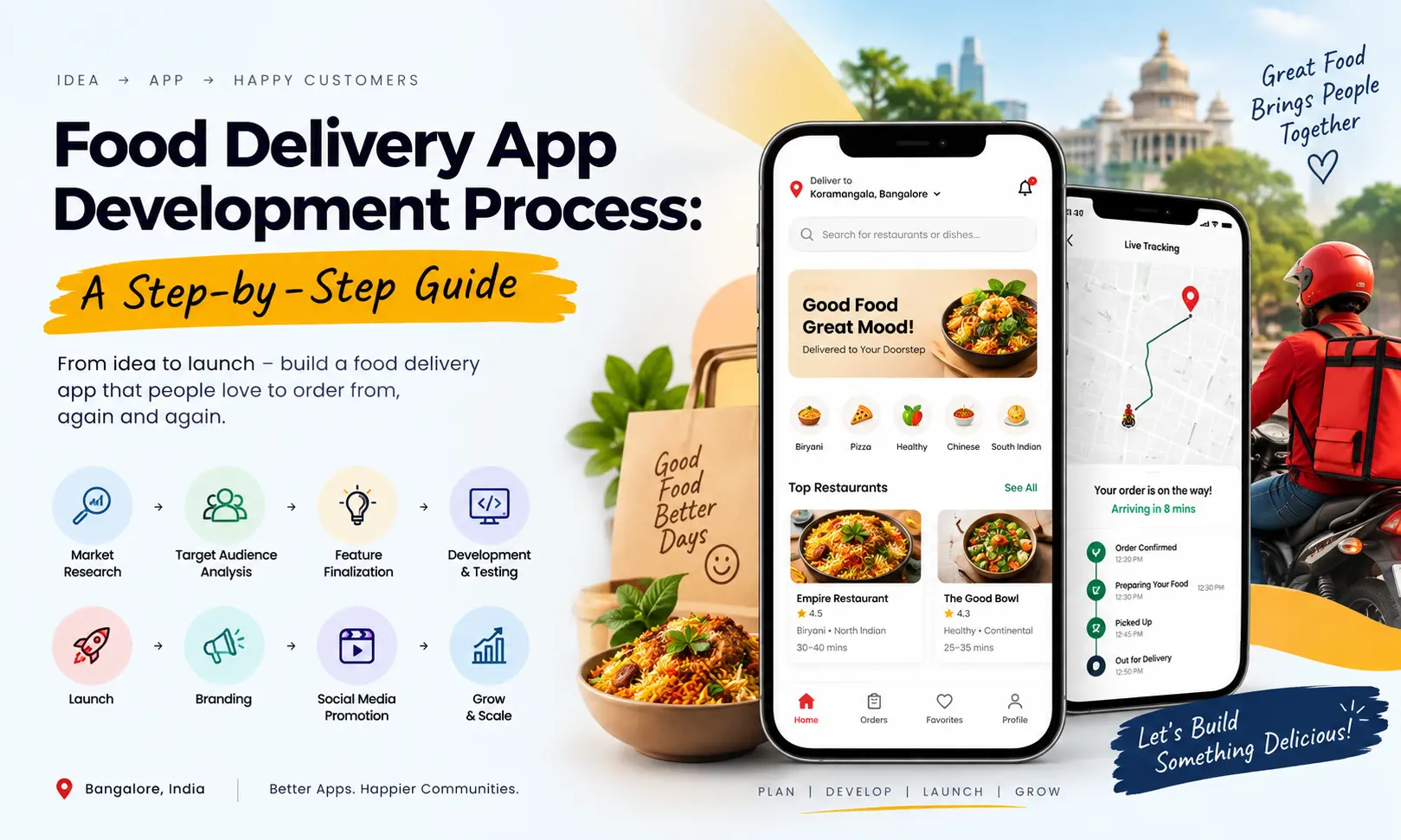
This guide explains the food delivery app development process step by step, starting with market research and customer analysis and moving through feature planning, UI/UX, development, testing, launch, branding and social media promotion.
Why Food Delivery Apps Still Have Business Opportunities in India
The Indian food delivery market has become highly competitive, but competition does not automatically mean there is no room for a new product.
The mistake many entrepreneurs make is thinking that a new food delivery app must immediately become another nationwide marketplace. That approach can require significant investment in restaurants, delivery operations, technology, customer acquisition and promotional campaigns.
A more practical starting point can be a sharply defined market.
- Food delivery for a particular city or locality
- Home-cooked food delivery
- Healthy meal delivery
- Corporate lunch delivery
- College and student food delivery
- Office-area restaurant delivery
- Regional cuisine delivery
- Cloud kitchen ordering
- Restaurant-owned direct ordering
- Subscription-based meal delivery
- Community-focused food ordering
The opportunity often lies not in having more restaurants, but in solving a specific problem better.
Step 1: Define the Food Delivery Business Idea
Before approaching a development team, write down exactly what your food delivery platform is supposed to do.
A simple idea such as "I want to build a food delivery app" is not enough for development planning.
You should be able to explain your business in one or two sentences.
For example:
- A local food delivery app serving selected restaurants within a specific area.
- A direct-ordering platform helping restaurants accept orders without depending entirely on third-party marketplaces.
- A healthy meal subscription platform for working professionals.
- A home-food marketplace connecting customers with verified home chefs.
This definition becomes the foundation for your feature list, technology requirements, marketing strategy and development budget.
Step 2: Study the Market Before Writing a Single Line of Code
Market research should come before app development.
Instead of asking only "How can I build this app?", ask "Who will use it, why will they use it and what will make them return?"
Your research should cover the following areas.
- Existing food delivery platforms
- Local restaurants and cloud kitchens
- Customer ordering habits
- Popular cuisines
- Average order values
- Delivery radius
- Peak ordering hours
- Discount expectations
- Payment preferences
- Delivery problems
- Restaurant commission concerns
- Customer complaints and negative reviews
Do not restrict your research to competitor websites. Read customer reviews, restaurant discussions, social media comments and local conversations. These often expose small but meaningful problems that polished competitor websites do not reveal.
For example, customers may complain about late delivery, incorrect orders, poor packaging or limited restaurant choices. Restaurant owners may be more concerned about commissions, visibility, customer ownership or promotional expenses.
Each of these complaints can become a product opportunity.
Step 3: Identify and Understand Your Target Customers
A food delivery app cannot be designed properly until the target customer is clear.
"Everyone who eats food" is not a useful target audience.
Instead, create customer groups based on their habits, location, income range, lifestyle and ordering behaviour.
Your target audience could include:
- Working professionals
- College students
- Families
- Hostel residents
- Corporate employees
- Fitness-conscious customers
- People living away from their hometown
- Frequent online food buyers
- Customers looking for regional cuisine
- Customers interested in affordable daily meals
For every customer group, identify what they actually care about.
A student may care about affordable meals and discounts. A working professional may care more about delivery timing. A family may value restaurant ratings, food variety and reliable delivery. A fitness-focused customer may look for calorie information, ingredients and high-protein options.
This analysis directly influences your app features.
Step 4: Study Competitors and Find Your Differentiator
Competing directly with established food delivery platforms can be expensive. Therefore, competitor research should be used to find a gap rather than simply copy existing features.
Prepare a competitor comparison covering:
- Restaurant selection
- Delivery charges
- Commission model
- Customer offers
- Restaurant dashboard
- Delivery tracking
- Customer support
- Subscription plans
- Loyalty programmes
- Restaurant visibility
- Ordering experience
Then ask a sharper question:
What can our platform do differently?
Your differentiator could be lower delivery charges, a focused geographical area, faster local delivery, better restaurant economics, a niche cuisine, subscription meals, direct restaurant ordering or a completely different customer experience.
Step 5: Decide the Food Delivery Business Model
The business model determines how the platform earns money and how several important features should be designed.
Common food delivery models include:
- Commission from restaurants
- Delivery charges from customers
- Restaurant subscription plans
- Customer membership plans
- Featured restaurant listings
- Sponsored restaurant placements
- Advertising revenue
- Order-based platform fees
- Meal subscription plans
- Direct ordering software for restaurants
You do not necessarily need to depend on a single revenue source.
However, the revenue model should be decided early because it affects restaurant onboarding, billing, reporting, payment calculations and admin functionality.
Step 6: Finalise the Food Delivery App Features
Feature planning is one of the most important stages of food delivery app development.
Do not add every feature you see in large food platforms simply because it exists there. Start with the features that support your business model and customer journey.
Customer App Features
- User registration and login
- Mobile number and OTP verification
- Location detection
- Restaurant listing
- Search and filters
- Food category browsing
- Restaurant details
- Food item details
- Add to cart
- Custom food instructions
- Coupon codes
- Multiple addresses
- Online payments
- Cash on delivery, if applicable
- Order confirmation
- Live order status
- Delivery tracking
- Order history
- Ratings and reviews
- Favourite restaurants
- Push notifications
- Customer support
Restaurant Panel Features
- Restaurant registration
- Document submission
- Restaurant profile management
- Menu management
- Food category management
- Pricing management
- Availability control
- Order notifications
- Order acceptance and rejection
- Order preparation status
- Sales reports
- Customer order information
- Offers and coupons
- Payout information
Delivery Partner Features
- Delivery partner registration
- Profile verification
- Availability status
- New delivery requests
- Order acceptance
- Pickup information
- Customer location
- Navigation
- Delivery status updates
- Delivery history
- Earnings information
Admin Panel Features
- Dashboard
- Customer management
- Restaurant management
- Delivery partner management
- Food category management
- Menu management
- Order management
- Payment management
- Commission management
- Coupon management
- Offer management
- Reports and analytics
- Content management
- Notification management
- Support management
Step 7: Plan the Customer, Restaurant and Delivery Ecosystem
A food delivery platform normally involves multiple users, and each user requires a different interface.
The customer places an order. The restaurant receives and prepares it. The delivery partner collects it and delivers it. The admin team oversees the complete operation.
This means your project may include:
- Customer mobile application
- Restaurant web or mobile panel
- Delivery partner mobile application
- Admin dashboard
- Backend API
- Website or landing page
Planning these components together helps prevent gaps later in development.
Step 8: Prepare the UI/UX Design
Food ordering is a fast decision-making activity. Customers should not have to fight their way through the interface to find dinner.
The design should make important actions obvious.
- Search should be easy to find.
- Restaurant information should be readable.
- Food photographs should load properly.
- Prices should be clearly displayed.
- Offers should not hide essential information.
- Cart details should be easy to review.
- Checkout should contain minimal unnecessary steps.
- Order status should be immediately understandable.
At this stage, designers usually create wireframes and visual screens before development begins.
A clickable prototype can also be useful because business owners can experience the proposed ordering journey before development investment starts.
Step 9: Select the Technology Stack
The technology stack should be selected according to the expected scale, functionality, budget and future roadmap.
A typical food delivery platform may use technologies such as:
- Android and iOS technologies or a cross-platform mobile framework
- PHP, Laravel, Node.js or another backend technology
- MySQL or another suitable database
- REST APIs
- Cloud hosting infrastructure
- Google Maps or another mapping service
- Payment gateway integration
- SMS and OTP services
- Push notification services
The right technology is not necessarily the newest technology. The better choice is the technology that your development team can maintain, scale and troubleshoot efficiently.
Step 10: Start Food Delivery App Development
Once the business requirements, feature list and UI designs are approved, actual development can begin.
A structured development cycle generally divides the project into smaller modules.
- User authentication
- Customer profile
- Restaurant module
- Food catalogue
- Cart and checkout
- Order management
- Payment integration
- Delivery management
- Notifications
- Admin dashboard
- Reports and analytics
Developing module by module makes testing easier and allows the business owner to review progress rather than waiting until the entire application is finished.
Step 11: Integrate Payments, Maps, Notifications and Other Services
Food delivery applications depend on several external services.
Payment integration allows customers to pay digitally. Mapping services help with restaurant discovery, address selection, route calculation and delivery tracking. Notification services keep customers, restaurants and delivery partners informed about order events.
Depending on the business model, the application may also require:
- OTP verification
- SMS notifications
- Email notifications
- Push notifications
- Google Maps integration
- Payment gateway
- Location services
- Analytics tools
- Customer support tools
These integrations should be planned early because third-party service limitations, pricing and technical requirements can affect the overall project.
Step 12: Build the Admin and Restaurant Management Panels
The mobile app is what customers see, but the backend is where the business is actually controlled.
The admin panel should give the business team a clear view of orders, restaurants, customers, payments, delivery activity and operational issues.
The restaurant panel should make everyday order management quick and practical. Restaurant staff should be able to update menus, accept orders, change food availability and monitor order status without unnecessary complexity.
A well-planned backend can save considerable operational effort once order volume begins to rise.
Step 13: Test the Application Before Launch
Food delivery apps need more than a basic functional test.
Testing should cover the complete journey from registration to successful delivery.
- Registration and login testing
- OTP verification testing
- Restaurant search testing
- Cart testing
- Coupon testing
- Payment testing
- Order placement testing
- Restaurant order acceptance testing
- Delivery assignment testing
- Location and map testing
- Push notification testing
- Cancellation and refund testing
- Performance testing
- Security testing
- Different device and screen testing
Real-world scenarios should also be tested. What happens when a restaurant rejects an order? What happens when payment succeeds but the order is not created? What happens when the delivery partner loses internet connectivity? What happens when an item becomes unavailable after the customer places the order?
These are the situations that separate a working demo from a production-ready platform.
Step 14: Prepare the App for Launch
Launching an application is not the same as uploading an APK or submitting an iOS build.
Before launch, prepare:
- App name
- App icon
- Splash screen
- App screenshots
- App descriptions
- Privacy policy
- Terms and conditions
- Customer support details
- Website or landing page
- Social media profiles
- Restaurant onboarding material
- Delivery partner onboarding process
It is also sensible to launch in a limited geographical area initially rather than opening the entire country on day one.
Step 15: Build the Brand Before the Public Launch
A food delivery app needs a recognisable identity, not just an application icon.
Your branding should cover the app name, logo, colours, typography, packaging where applicable, social media profiles, website and promotional material.
More importantly, the brand should communicate why the platform exists.
A memorable name combined with a clear positioning statement can make a new food platform easier to recognise in a crowded market.
For example, instead of simply saying "Food Delivery App", a brand could position itself around a particular promise such as local food, affordable meals, home-style cooking, office lunch or regional cuisine.
Step 16: Use Social Media and Short Videos for Promotion
Food is naturally suited to visual content, which makes social media an important part of the launch strategy.
Short-form videos can be particularly useful because a food app has plenty of material to work with.
- Restaurant food videos
- Funny food-related reels
- Behind-the-scenes restaurant videos
- Delivery partner stories
- Customer reactions
- Local food discoveries
- New restaurant announcements
- Limited-time offers
- Food challenges
- Founder videos
- App feature demonstrations
The objective should not be to make every post look like an advertisement.
A funny or highly relatable food reel can attract attention first and introduce the app afterwards. This is especially useful for a new brand that has little recognition in the beginning.
For a local launch, content can also be built around specific neighbourhoods, restaurants, food habits and local humour. A Bangalore-focused food platform, for example, could create content around office lunch, traffic, late-night cravings, weekend food plans and popular local food spots.
Step 17: Start With a Soft Launch
A soft launch allows you to test the business with a smaller audience before spending heavily on advertising.
You can start with a limited number of restaurants and a defined delivery area.
During this stage, track:
- Number of app registrations
- Number of first orders
- Repeat orders
- Average order value
- Cancellation rate
- Delivery time
- Restaurant acceptance rate
- Customer complaints
- Coupon usage
- Customer acquisition cost
The first few weeks can reveal more than months of theoretical planning.
Step 18: Launch, Measure and Improve
Once the initial operational issues are under control, the platform can gradually expand.
Growth should be based on actual numbers rather than assumptions.
For example, if customers repeatedly abandon the checkout screen, investigate the checkout process. If restaurant partners are not accepting orders quickly, examine the restaurant workflow. If customers place one order and never return, study pricing, food quality, delivery experience and retention campaigns.
Useful metrics can include:
- Customer acquisition cost
- Customer retention
- Repeat purchase rate
- Average order value
- Orders per customer
- Restaurant activation rate
- Delivery completion rate
- Cancellation rate
- Customer support requests
- Revenue per order
A food delivery application should be treated as an evolving product rather than a one-time software project.
Common Mistakes to Avoid During Food Delivery App Development
Several mistakes can make a food delivery project unnecessarily expensive.
- Starting development without proper market research
- Trying to serve everyone from the beginning
- Copying every feature from established platforms
- Ignoring restaurant requirements
- Underestimating delivery operations
- Launching without enough restaurant supply
- Spending heavily on advertising before testing the product
- Ignoring customer retention
- Choosing technology only because it is trendy
- Skipping proper payment and cancellation testing
- Ignoring app performance on budget smartphones
- Launching without a social media content strategy
The strongest food delivery platforms are not necessarily the ones with the longest feature list. They are the ones that make the ordering process useful, dependable and repeatable for a clearly defined audience.
How Much Planning Is Needed Before Food Delivery App Development?
The amount of planning depends on the size and business model of the platform.
A focused local food delivery application may require a relatively lean first version. A multi-city marketplace with customers, restaurants, delivery partners, complex commissions, promotions, loyalty programmes and advanced analytics requires considerably more planning and development.
This is why defining the Minimum Viable Product (MVP) before development is important.
The MVP should contain the essential features needed to launch and validate the business idea. Additional functions can be introduced after customer and restaurant feedback provides evidence that they are worth building.
Food Delivery App Development in Bangalore, India
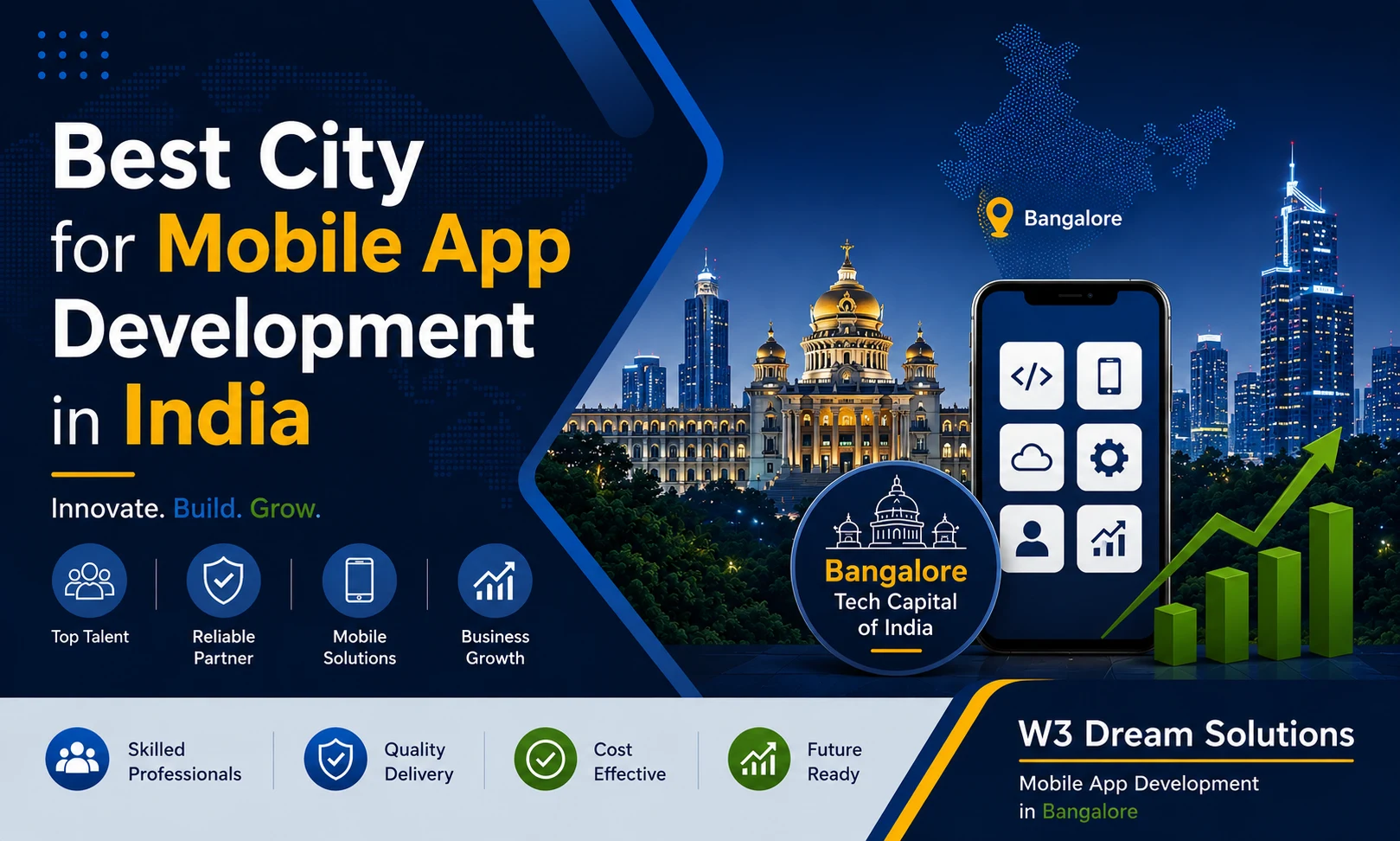
Bangalore is one of India's major technology and startup centres, making it a practical location for building and launching technology-driven food businesses.
For businesses planning a food delivery platform in Bangalore or elsewhere in India, development should ideally cover more than mobile application coding. The project may require product planning, UI/UX design, backend development, payment integration, maps, restaurant management, delivery operations, testing, deployment and post-launch improvements.
For a new food-tech venture, starting with one city, a specific customer segment or a focused food category can provide a more manageable route to market than attempting a nationwide launch immediately.
Final Thoughts
The food delivery app development process begins long before development and continues well after launch.
The most important stages are market research, customer analysis, business model selection, feature finalisation, UI/UX planning, technology selection, development, testing, launch preparation, branding and customer acquisition.
There is no magic feature that guarantees a food delivery app will succeed. The stronger route is to understand a real customer problem, create a focused product around it, launch in a manageable market and use actual customer behaviour to guide the next stage.
And because food is one of the most shareable categories on social media, the marketing strategy should be planned alongside the product. A well-made food reel can sometimes introduce a new brand to more people than a traditional promotional post, particularly when the content feels entertaining rather than purely commercial.
In short, build the product with a business plan, launch with a defined audience and promote it with content people actually want to watch.
Looking to Build a Food Delivery App?
If you are planning to launch a food delivery platform for a restaurant group, startup, cloud kitchen, local food business or a specialised food marketplace, the development process should begin with your business model and target audience rather than with a generic feature list.
Our team in Bangalore, India can help plan and develop food delivery platforms covering customer applications, restaurant management, delivery operations, admin dashboards, payment integration, location services and other required components.
Explore our Mobile App Development Services to discuss your idea, requirements and development roadmap.
Other Blogs
Subscribe
Get the latest blog updates directly in your inbox.