




Introduction
Appointment booking is the heartbeat of any clinic. Whether it is a small neighbourhood practice or a multi-speciality healthcare centre in Bangalore, how patients schedule their visits directly impacts efficiency, patient satisfaction, and daily operations.
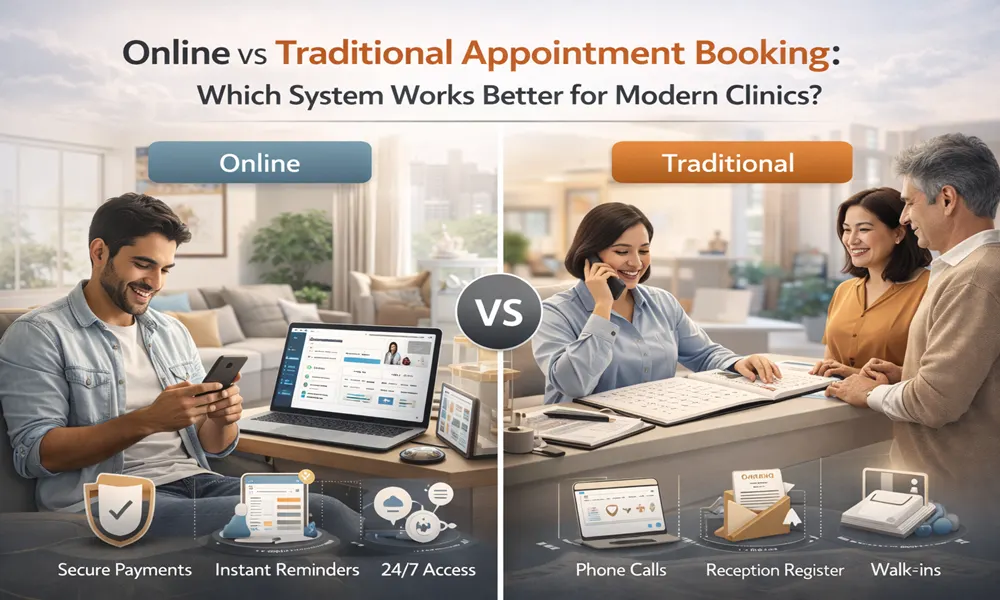
For decades, clinics relied on phone calls, reception registers, and walk-in scheduling. Today, online appointment systems are gaining popularity, promising speed and convenience. But does going digital truly make sense for every clinic? Let us explore both approaches with clarity and practicality.
Understanding Traditional Appointment Booking
Traditional booking involves manual handling — phone calls, physical registers, reception desk entries, and verbal confirmations. Many clinics still prefer this method because it feels familiar and easy to manage without technical investment.
Advantages of Traditional Booking
- Personal interaction builds trust, especially among elderly patients.
- No dependence on internet connectivity.
- Staff maintain direct control over scheduling decisions.
- Suitable for clinics with limited patient volume.
Limitations
- High chance of human error such as double bookings.
- Missed calls leading to lost appointments.
- Time-consuming for reception staff.
- Difficult to maintain accurate records and analytics.
In busy Bangalore clinics, managing peak-hour calls manually often becomes overwhelming.
Understanding Online Appointment Booking
Online appointment booking allows patients to schedule consultations through websites, mobile apps, or automated systems without needing to call the clinic. Patients can check available slots, choose doctors, and confirm appointments instantly.
Advantages of Online Booking
- 24/7 appointment access for patients.
- Reduced workload for front desk staff.
- Automatic reminders reduce no-shows.
- Real-time schedule visibility.
- Easy integration with patient databases.
Digital booking systems also create a professional impression, especially for younger patients who prefer quick online interactions.
Key Differences Between Online and Traditional Booking
Patient Convenience
Online booking clearly wins in terms of accessibility. Patients can book appointments late at night or early morning without waiting for clinic hours. Traditional methods rely heavily on staff availability.
Operational Efficiency
Manual systems require continuous monitoring, while digital platforms automate confirmations, reminders, and cancellations. This reduces administrative stress significantly.
Error Management
Manual registers are prone to mistakes. Online systems maintain structured records, minimising scheduling conflicts.
Cost Consideration
Traditional booking has minimal initial cost but hidden expenses like staff time and missed appointments. Online systems require initial setup but often save operational costs over time.
Patient Behaviour Trends in Indian Cities
Urban patients in cities like Bangalore increasingly expect digital convenience. Many compare clinics based on ease of booking, quick response, and clear scheduling.
- Faster appointment confirmations.
- Better patient engagement.
- Improved reputation among tech-savvy users.
However, traditional booking still plays an important role for patients who prefer speaking directly with staff.
Hybrid Approach — The Practical Middle Ground
Instead of choosing one over the other, many clinics are adopting a hybrid strategy:
- Online booking for self-service users.
- Phone booking for patients who prefer human interaction.
This dual approach balances technology with personalised care.
Challenges Clinics Should Consider Before Switching
Before implementing online booking, clinics should evaluate:
- Staff training requirements.
- Integration with existing software.
- Data privacy and patient information security.
- Ease of use for both staff and patients.
Choosing the right platform is crucial. Complicated interfaces often discourage adoption.
Which Option is Better?
There is no single answer that fits every clinic. Small practices with limited patient flow may continue using traditional methods comfortably. High-volume clinics or growing healthcare centres benefit significantly from digital appointment systems due to automation and improved organisation.
Ultimately, the best system is one that simplifies operations while keeping patients happy.
Final Thoughts
The healthcare industry is gradually shifting towards digital convenience, but human interaction remains important. Clinics that combine technology with thoughtful patient care often achieve the best results.
Online appointment booking is not merely a trend; it reflects changing patient expectations. However, traditional methods still have value, particularly when used alongside modern solutions.
Clinics looking to implement advanced digital scheduling can explore professional healthcare software solutions by visiting Website Development Company in Bangalore.
Other Blogs
Subscribe
Get the latest blog updates directly in your inbox.