
Introduction
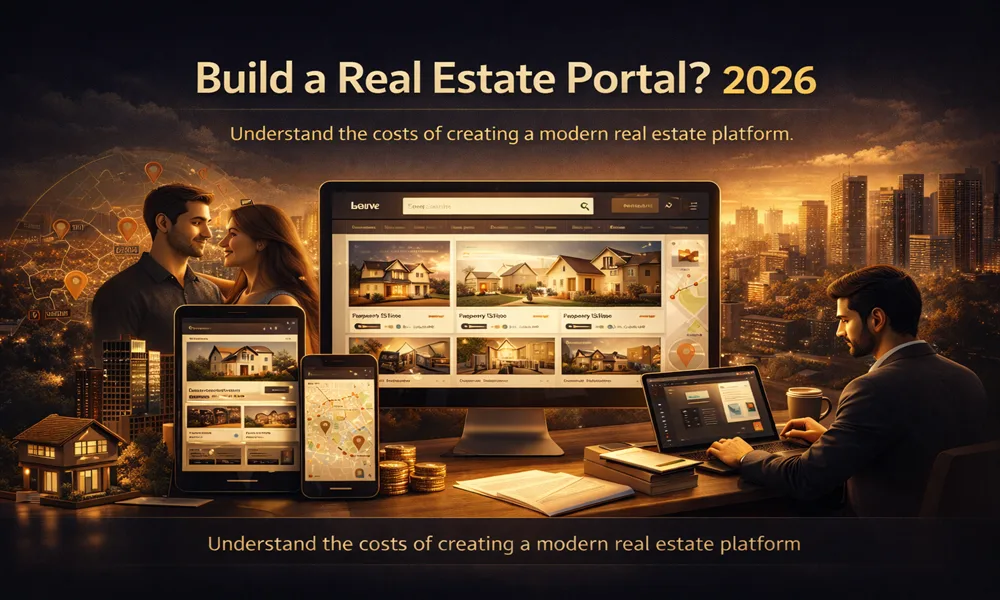
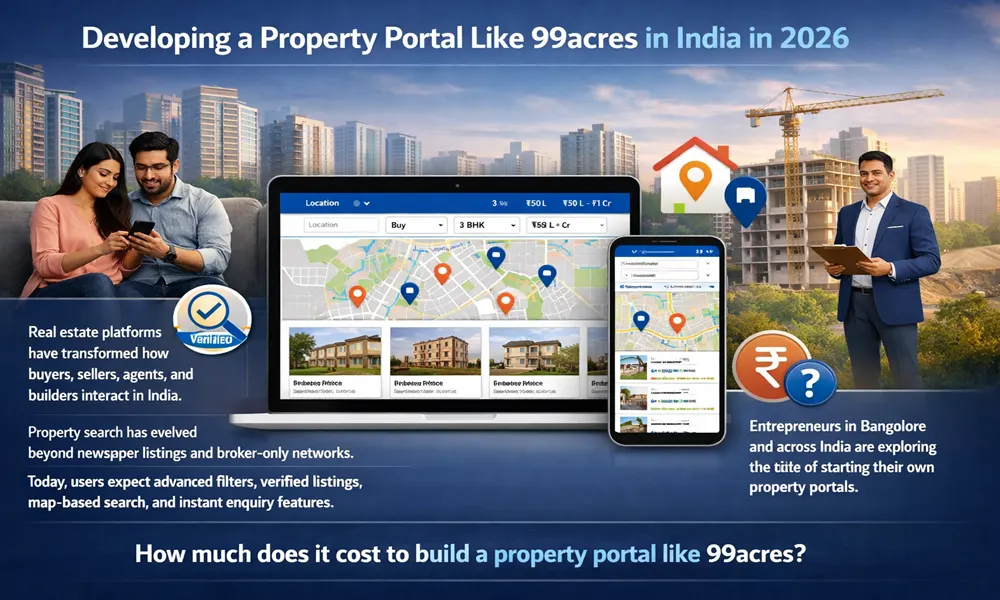
The real estate industry has quietly shifted from brochure-style websites to full-scale digital platforms where property discovery, communication, booking, and analytics happen under one roof. Today, a real estate portal is not just an online presence — it acts as a business engine that drives leads, builds credibility, and automates daily operations.
Businesses in :contentReference[oaicite:1]{index=1} — from independent brokers to large developers — often face a critical decision: should they invest in custom real estate portal development or start with ready-made platforms?
While ready-made systems promise quick deployment, custom-built portals offer long-term flexibility. The right choice depends on business goals, scale expectations, and operational workflows.
Understanding Custom Real Estate Portal Development
Custom development means building a portal from the ground up according to your exact requirements instead of adapting your business to fit predefined software.
A custom portal allows you to define:
- Property listing workflows
- User roles such as buyers, sellers, agents, and admins
- Advanced search filters
- Map-based property discovery
- CRM integration
- Payment and booking systems
- Lead management dashboards
- Unique interface aligned with your brand
Unlike template-based systems, custom platforms grow alongside your business rather than limiting your expansion.
What Are Ready-Made Real Estate Platforms?
Ready-made platforms include SaaS tools, CMS plugins, or pre-built marketplace scripts designed for fast setup.
Typical characteristics include:
- Predefined templates
- Basic property listing features
- Standard search functionality
- Fixed design structures
- Subscription-based pricing
- Limited backend control
These platforms can be useful for early-stage projects or businesses testing the market before investing heavily.
Custom Development: Key Advantages
Full Control Over Features
Custom portals are built around your workflow. Whether you want AI-based property recommendations, multi-language support, or integration with third-party systems, everything can be implemented without restrictions.
Branding Without Compromise
Real estate portals depend heavily on trust. A distinctive interface and smooth navigation improve user perception and encourage repeat visits.
Better Performance Optimisation
Custom platforms avoid unnecessary plugins or heavy code, resulting in faster load times and improved technical health.
Scalability for Growth
As your platform gains users, features such as subscription models, premium listings, and automated notifications can be added easily.
Ready-Made Platforms: When They Make Sense
Ready-made systems work well when:
- Budget is limited initially
- You need rapid launch
- Requirements are basic
- Long-term scalability is not a priority
A small broker entering digital operations may prefer a ready-made system to test demand before investing in a custom solution.
Hidden Challenges in Ready-Made Platforms
Many businesses discover constraints only after scaling.
Common issues include:
- Limited customisation options
- Performance issues due to heavy templates
- Vendor lock-in
- Increasing monthly subscription costs
- Difficulty integrating advanced features
Cost Comparison: Short-Term vs Long-Term Thinking
Ready-made platforms appear cheaper initially because setup costs are low.
However:
- Subscription fees accumulate over time
- Feature add-ons require extra payment
- Migration costs arise when scaling
Cost Comparison: Custom vs Ready-Made Real Estate Portal (Bangalore)
Ready-Made Portal Setup: ₹10,000 – ₹80,000 (theme setup, basic customisation, initial launch)
Custom Real Estate Portal Development: ₹1,50,000 – ₹10,00,000+ (design, development, advanced features, integrations)
Ongoing Cost: Ready-made: ₹2,000 – ₹15,000/month | Custom: ₹10,000 – ₹50,000/month
Custom development involves higher initial investment but offers better cost control over the long term.
SEO and Marketing Flexibility
Custom portals allow advanced SEO structures such as:
- Custom URL architecture
- Location-based property pages
- Dynamic schema implementation
- Faster loading speeds
- Improved Core Web metrics
Ready-made platforms may restrict technical SEO implementation, limiting organic traffic growth.
Security and Data Ownership
Data is a critical asset for real estate businesses.
Custom portals provide:
- Full ownership of user data
- Controlled hosting environment
- Custom security policies
SaaS platforms may store data on external servers with limited control.
Which Option Should You Choose?
Choose custom development if:
- You aim to build a strong brand identity
- You expect business growth
- You require advanced features
- SEO is a major strategy
Choose ready-made platforms if:
- You want a quick experimental launch
- Budget constraints are significant
- Requirements are basic
Final Thoughts
The debate between custom real estate portal development and ready-made platforms is not about which option is universally better — it is about aligning technology with business vision.
Real estate businesses in Bangalore increasingly move toward custom-built portals once they realise that digital presence is no longer just informational; it drives actual revenue.
An experienced Website Development Company in Bangalore can help businesses build scalable platforms aligned with their operational workflows and growth strategy.
Other Blogs
Subscribe
Get the latest blog updates directly in your inbox.