Introduction
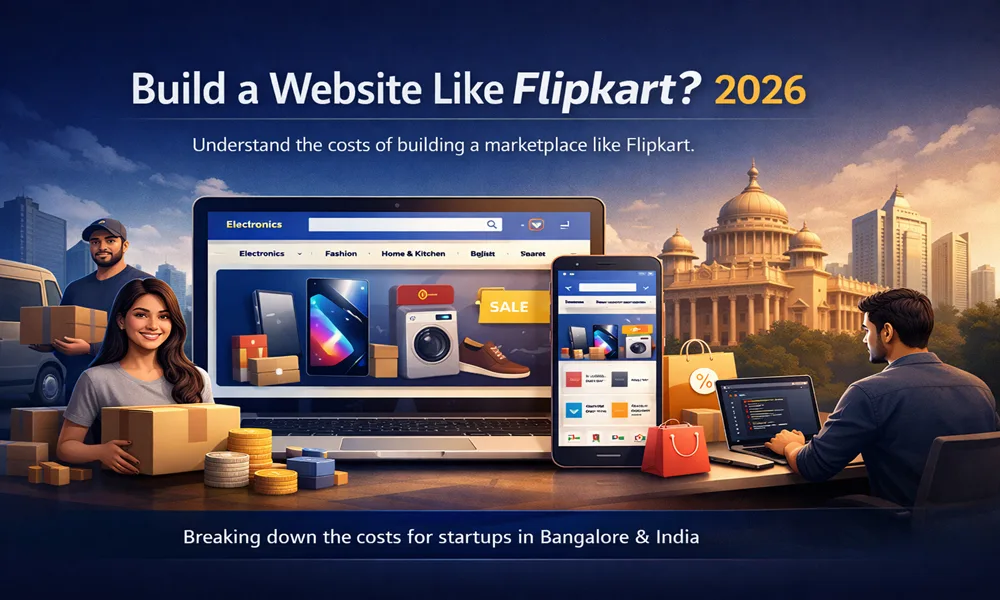
Flipkart changed the way India shops online. From daily household products to premium electronics, everything sits just a click away. Naturally, many entrepreneurs and startups now wonder — what does it actually cost to build a website like Flipkart?
The answer is not a single number. The price depends on how ambitious your idea is, the number of features you want, scalability expectations, and whether you are launching a small test version or a large-scale marketplace.
In this article, let us break down the cost ranges in simple terms, especially for businesses planning development from Bangalore or anywhere in India.
Understanding What “Flipkart-Like Website” Really Means
Before discussing pricing, it is important to understand that Flipkart is not just an online store — it is a multi-vendor marketplace with complex backend systems.
A typical Flipkart-style platform includes:
- Vendor registration and management
- Product catalogue with filters
- Customer login and profiles
- Order processing workflow
- Multiple payment integrations
- Logistics and shipping coordination
- Reviews and ratings
- Offer engines and discounts
- Admin dashboard with analytics
Trying to build everything from day one will require serious investment. Most businesses begin small and gradually expand features.
Rough Cost Estimate for Building a Flipkart-Style Website (India)
Very Basic eCommerce Website — Up to ₹50,000
This level suits businesses testing online sales or creating a simple marketplace presence.
- Ready-made theme setup
- Basic product listing
- Single vendor or limited sellers
- Standard checkout
- Payment gateway integration
- Simple admin panel
Limitations include minimal customisation, limited scalability, and basic performance setup.
Basic Custom eCommerce Platform — Around ₹1 Lakh
This category adds structured design and more flexibility compared to entry-level solutions.
- Custom UI aligned with brand identity
- Category-based browsing
- Coupon system
- Basic vendor functionality
- Mobile-friendly interface
- SEO-ready structure
This suits growing businesses planning expansion and brands wanting a professional marketplace feel.
MVP Marketplace Version — ₹2 to ₹3 Lakhs
An MVP focuses on launching fast with core functionality without unnecessary overhead.
- Multi-vendor onboarding
- Commission management
- Advanced product filtering
- User dashboard
- Real-time order tracking
- Notification system
- Secure payment flow
- Performance optimisation
This stage allows businesses to test real users and validate revenue models.
Fully Functional Marketplace Platform — ₹4 to ₹9 Lakhs
This is closer to a serious Flipkart-style platform built for scale.
- Custom architecture
- High-speed product search
- Seller analytics dashboards
- AI-based product recommendations
- Warehouse or inventory sync
- Advanced discount engine
- API integrations (logistics, CRM, ERP)
- High-level security implementation
- Cloud deployment and load balancing
This model suits funded startups and large-scale marketplaces.
Major Factors Affecting Development Cost
Technology Stack
Choosing frameworks like Laravel, Node.js, or custom PHP impacts performance and development cost. Advanced stacks require experienced developers.
UI and User Experience
A marketplace thrives on user behaviour. A visually engaging layout with intuitive navigation needs extra design effort.
Vendor Management System
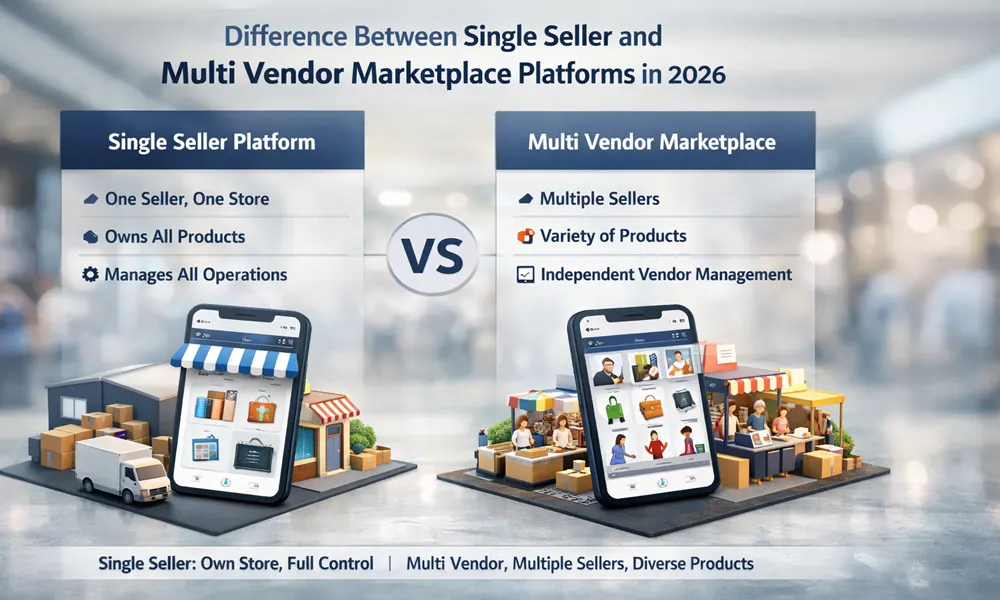
Multi-vendor logic significantly increases development complexity compared to single-store websites.
Payment Integrations
Supporting multiple payment modes like UPI, wallets, EMI, and international payments increases testing and development work.
Scalability Planning
If your platform expects high traffic, infrastructure planning and optimisation become important cost drivers.
Businesses planning serious growth often partner with an experienced Website Development Company in Bangalore to ensure strong technical execution and long-term support.
Development Approach Recommended for Indian Businesses
Instead of building a massive system immediately, many successful startups follow a staged approach:
- Launch MVP
- Analyse user behaviour
- Improve features gradually
- Invest in automation and performance later
This reduces financial risk and supports smarter business decisions.
Why Choose a Bangalore-Based Development Company?
Bangalore has become a hub for skilled developers and eCommerce innovators. Working with a local team offers:
- Better communication and faster collaboration
- Understanding of Indian market behaviour
- Local payment and logistics integration expertise
- Ongoing support availability
Final Thoughts
Building a Flipkart-style website is not just about design; it involves engineering a reliable digital ecosystem. The right budget depends on business goals, technical vision, and long-term scaling plans.
Starting small and expanding strategically is often smarter than attempting an oversized launch from day one.
Other Blogs
Subscribe
Get the latest blog updates directly in your inbox.