Introduction: Why MVP Thinking is Winning in 2026
In today’s startup landscape, building a full-scale ecommerce platform on day one is no longer considered wise — especially when customer behaviour shifts faster than product roadmaps. Founders are realising that launching an MVP (Minimum Viable Product) is not about creating a half-finished app; it is about releasing a sharp, focused version that delivers core value without unnecessary complexity.
For Indian startups, particularly in tech-driven cities like Bangalore, speed of execution often decides whether an idea gains traction or fades into digital noise. An MVP ecommerce app allows founders to test assumptions, gather real buyer reactions, and refine their offering without draining resources.
Rather than chasing perfection, the goal is clarity: build only what customers truly need first.
What Exactly is an MVP Ecommerce App?
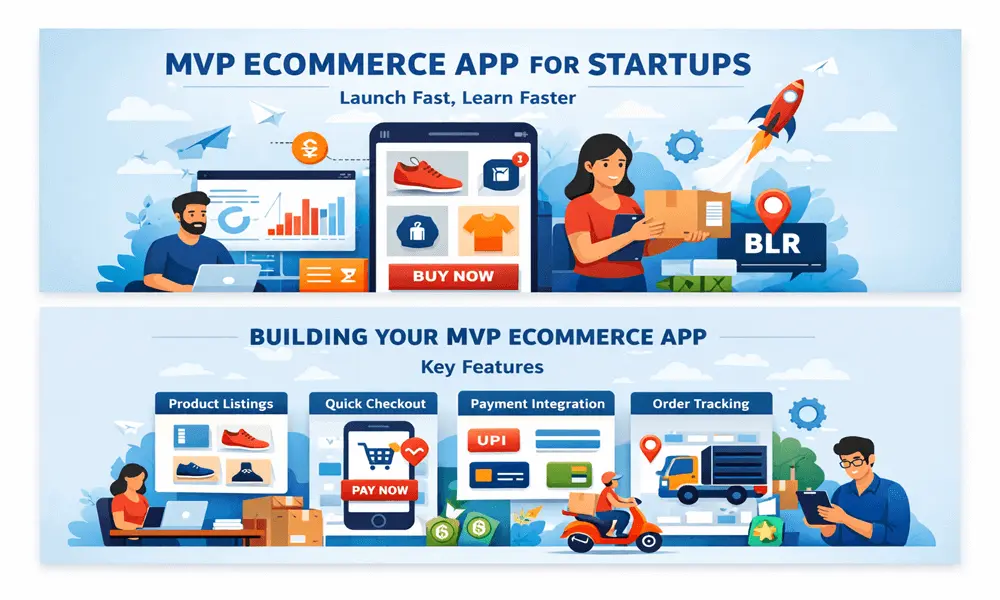
An MVP ecommerce app is a lean version of an online store containing only essential features required to showcase products, enable purchases, process payments, and collect user behaviour data.
Think of it as a proof-of-market version rather than a finished product catalogue. Instead of designing a massive multi-vendor ecosystem or advanced recommendation engines from the start, startups begin with the simplest structure that delivers a buying experience.
Why Startups Should Prioritise MVP Development
- Faster market entry with reduced launch risk
- Better control over development budgets
- Access to real user behaviour instead of assumptions
- Improved investor confidence with a working product
Core Features Every MVP Ecommerce App Should Include
Product Catalogue
Simple category structure with high-quality product visuals and clear pricing.
User Registration and Login
Basic account creation or social login for faster onboarding.
Cart and Checkout
Smooth checkout flow with minimal steps to avoid abandonment.
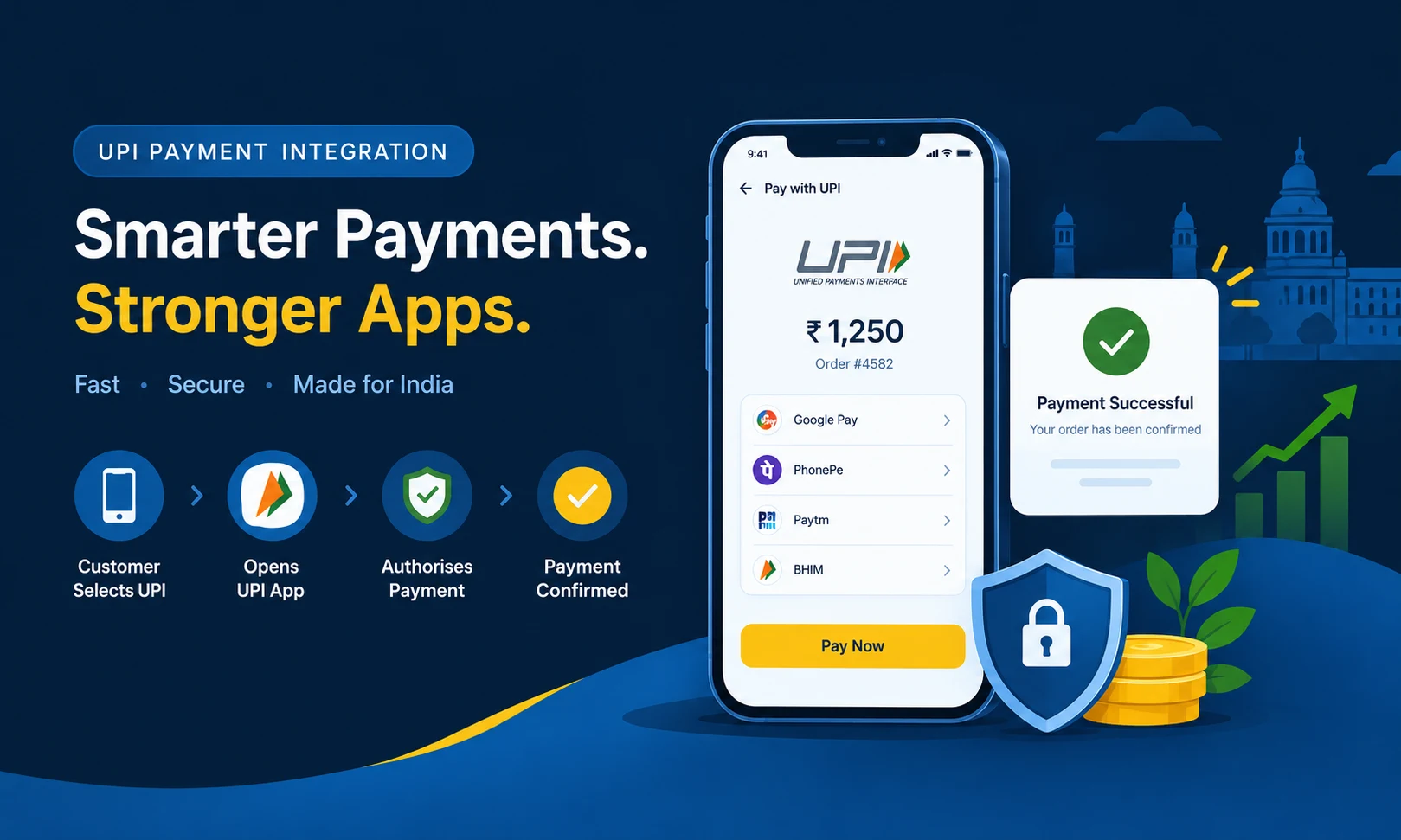
Payment Gateway Integration
Support for Indian payment preferences such as UPI, cards, and wallets.
Order Tracking
Customers expect visibility on their purchase journey.
Admin Dashboard
Inventory updates, order management, and customer queries in one panel.
Step-by-Step MVP Ecommerce Development Process
Define the Core Problem
Identify what gap your store fills — faster delivery, niche products, or pricing advantage. This clarity prevents unnecessary features later.
Identify Target Users
Urban shoppers, regional audiences, or B2B buyers each demand different user experience decisions.
Choose Technology Stack
- Laravel or Core PHP for backend execution
- React or Vue for frontend interfaces
- Flutter or React Native for mobile apps
UX First, Design Later
Fancy animations do not sell products — clarity does. Focus on product pages, visible pricing, and simple checkout.
Launch Early and Observe
Release to a limited audience and monitor user journeys to refine features.
MVP Ecommerce Development Cost in Bangalore (2026)
- Basic MVP ecommerce app: ₹2.5 Lakhs – ₹6 Lakhs
- Medium complexity MVP: ₹6 Lakhs – ₹12 Lakhs
- Multi-vendor or advanced integrations: ₹12 Lakhs+
Bangalore-based development companies often provide better collaboration due to proximity with startup ecosystems.
Common Mistakes Startups Make
- Trying to imitate large ecommerce brands immediately
- Over-investing in visuals instead of usability
- Ignoring analytics in early stages
- Launching without proper testing
- Adding too many integrations at once
MVP vs Full Ecommerce Platform
| MVP Approach | Full Platform Approach |
|---|---|
| Focused feature set | Extensive functionality |
| Faster launch | Longer development cycle |
| Lower initial investment | Higher upfront cost |
| Iteration-driven | Fixed roadmap |
Growth After MVP Launch
Once traction is visible, startups can gradually introduce:
- Multi-vendor features
- Advanced search filters
- Subscription models
- Loyalty programs
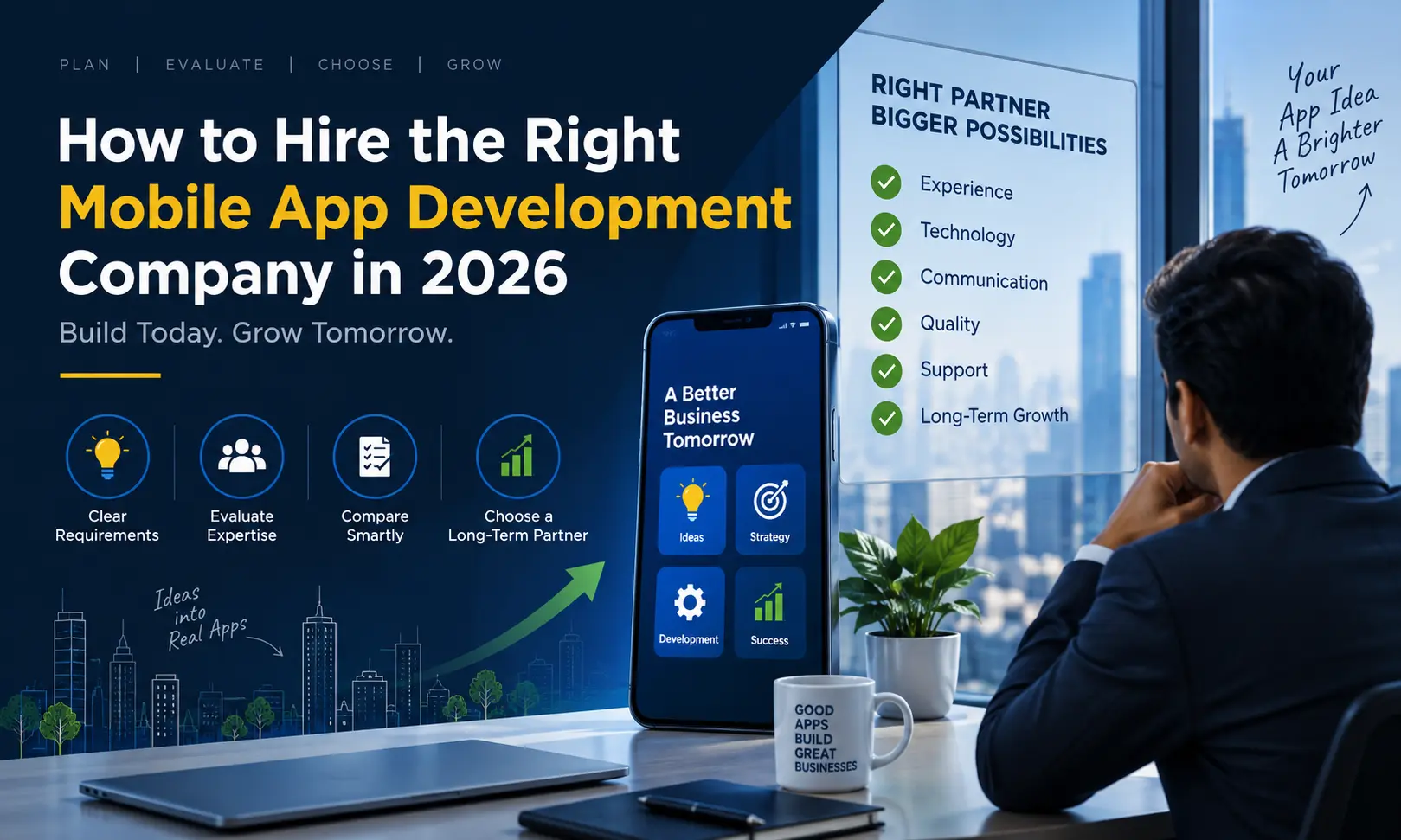
Choosing the Right Development Partner in Bangalore
Working with a local development team helps with faster communication cycles, understanding Indian ecommerce dynamics, payment gateway compliance, and scalability planning.
To understand our ecommerce app development workflow and pricing, visit our ecommerce app development services page to choose the right technology stack for your business goals with the help of a reliable mobile app development company in Bangalore India.
Other Blogs
Subscribe
Get the latest blog updates directly in your inbox.