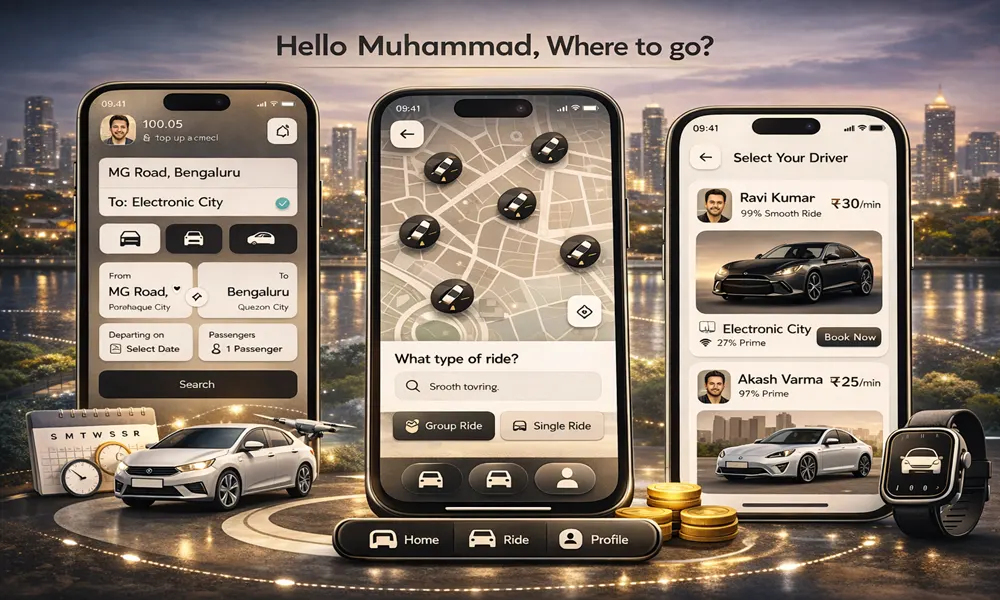
How Much Does It Cost to Develop Ola Clone App?
Building an Ola-style ride booking application has become one of the most discussed ideas among startups and transport businesses in India. Many entrepreneurs believe launching a taxi booking platform requires massive investment similar to large tech brands — but in reality, the cost depends heavily on features, technology choices, scalability requirements, and development strategy.
If you are planning to develop an Ola clone app in or anywhere in India, understanding cost layers before starting will save both budget and timeline surprises.
This guide explains realistic pricing ranges, what each budget level includes, and how businesses can plan development stages wisely.
Why Businesses Are Choosing Ola-like Apps
Urban transportation is evolving quickly. Customers expect quick booking, live driver tracking, cashless payment, and transparent pricing. A dedicated taxi booking app provides:
- Direct control over booking operations
- Reduced dependency on aggregator platforms
- Commission-based earning opportunities
- Brand visibility in local markets
- Better customer retention through personalised offers
With the right planning, even small fleets can launch their own platform.
Key Factors That Influence Ola Clone App Cost
Number of Apps Required
Usually, ride booking platforms include:
- Passenger App
- Driver App
- Admin Panel
- Dispatcher Dashboard (optional)
Each additional module increases design and backend complexity.
Core Features
Basic functionality includes ride booking, GPS tracking, fare estimation, payment gateway integration, and push notifications. Advanced features such as ride pooling or dynamic pricing increase development hours.
Technology Stack
Native apps, cross-platform frameworks, or hybrid solutions impact overall project effort.
Design Quality
Simple interfaces reduce cost, while animated and modern layouts demand extra design time.
Backend Infrastructure
High-performance servers are required for live tracking and real-time updates.
Estimated Cost Breakdown for Ola Clone App Development
Very Basic Version – Up to ₹1–2 Lakhs
Suitable for early testing or small local operations.
- Simple ride booking system
- Basic driver and customer apps
- Minimal admin dashboard
- Standard user interface
Basic Version – Around ₹2.5 Lakhs (Approx.)
Ideal for startups launching in a single city.
- Passenger and driver apps
- Live tracking
- Booking history
- Payment integration
- Notifications
- Basic admin panel
MVP Version – ₹2 to ₹4 Lakhs
Best option for businesses planning growth after initial launch.
- Improved user interface
- Ratings and reviews
- Multiple ride categories
- Promo codes
- Advanced admin controls
- Analytics reports
Fully Functional Version – ₹5 to ₹9 Lakhs
Recommended for companies aiming to compete with existing ride platforms.
- High-performance backend
- Smart pricing logic
- Multi-city management
- Driver verification workflows
- Wallet system
- Detailed analytics dashboard
- Scalable cloud setup
Additional Costs to Consider
- Server hosting and maintenance
- Google Maps API usage
- App Store and Play Store charges
- Marketing and user acquisition
- Regular updates and feature upgrades
Ignoring these ongoing expenses can affect long-term growth.
How Bangalore Development Companies Approach Ola Clone Apps
Most development teams follow a phased execution process:
- Requirement analysis and feature mapping
- UI design planning
- Backend architecture setup
- Mobile app development
- Testing across devices
- Deployment and post-launch support
This workflow helps reduce rework and unexpected delays.
Is Building an Ola Clone App Worth the Investment?
For businesses entering local transportation markets, a dedicated ride booking app creates strong branding opportunities and long-term customer ownership. However, success depends on more than technology — driver onboarding strategy, customer service quality, and regional pricing models play major roles.
Starting with a basic or MVP version and scaling gradually is often a practical route for Indian startups.
If you are planning to build a scalable ride booking platform, consulting an experienced mobile app development company in Bangalore a trusted mobile app development company in Bangalore can help you estimate realistic cost and development roadmap.
Other Blogs
Subscribe
Get the latest blog updates directly in your inbox.