

Introduction: Why LMS Platforms Are Becoming Business Essentials
Learning Management Systems are no longer limited to schools or universities. In 2026, companies across industries — from IT firms and manufacturing units to coaching institutes and corporate HR teams — are investing in LMS platforms to centralise knowledge, automate training, and create structured learning environments.
But one question always stands out before starting: How much does LMS development actually cost?
The answer depends on several layers — features, architecture decisions, scalability expectations, user load, integrations, and long-term maintenance plans. This guide explains realistic pricing expectations without exaggerated marketing promises.
Understanding LMS Development Pricing Structure
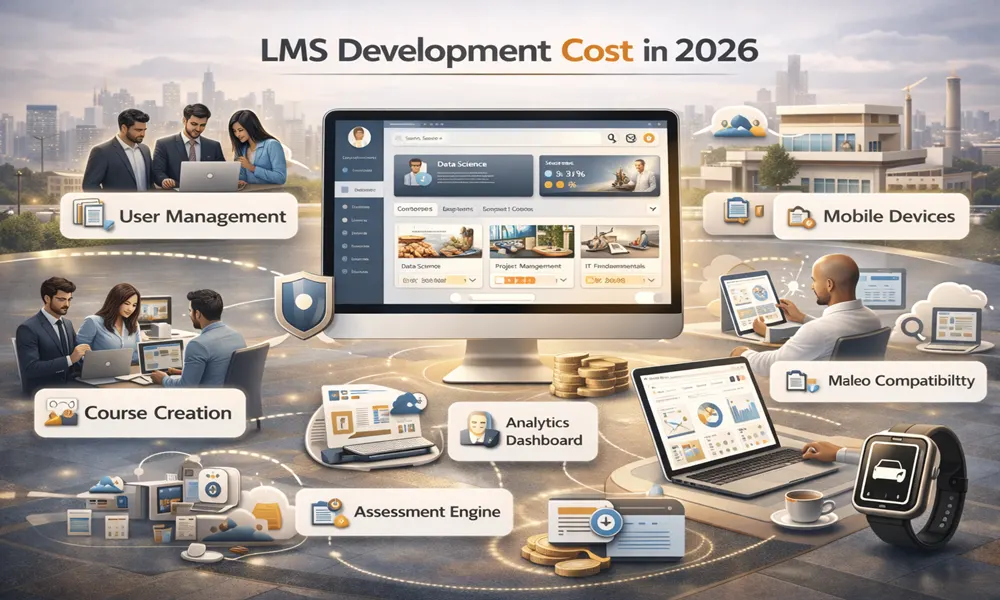
Many businesses assume LMS development is simply about creating video modules and login systems. In reality, a modern LMS is a complex digital ecosystem consisting of multiple connected components.
- User management systems
- Course creation modules
- Analytics dashboards
- Assessment engines
- Content hosting infrastructure
- Notification systems
- Security layers
- Mobile compatibility
Pricing varies based on how deeply each of these components is engineered.
Types of LMS Platforms and Their Cost Range
Basic LMS (Starter Version)
Suitable for startups or internal team training where requirements are minimal.
- User login and roles
- Course upload
- Progress tracking
- Basic reporting
Estimated Cost in India (2026): ₹2,50,000 – ₹6,00,000
Custom Business LMS
Designed for organisations that require structured learning workflows.
- Role-based dashboards
- Multi-level course structures
- Quiz and certification modules
- Admin analytics
- Integration with CRM or HR systems
Estimated Cost: ₹6,00,000 – ₹18,00,000
Enterprise-Level LMS
Built for scale, automation, and heavy usage environments.
- AI-assisted recommendations
- Advanced analytics
- Live session integrations
- Multi-language support
- API-based architecture
- Performance optimisation
Estimated Cost: ₹18,00,000 – ₹60,00,000+
Key Factors That Influence LMS Development Cost
Feature Complexity
The more interactive your platform becomes — gamification, discussion forums, AI grading — the more engineering effort is required.
UI/UX Design Quality
A clean interface is not just visual decoration; it improves course completion rates. Custom design adds cost but delivers better engagement.
Technology Stack
Choosing between Laravel, Node.js, microservices architecture, or headless LMS structures can significantly influence pricing.
Mobile App Requirement
If your LMS requires Android or iOS apps along with the web version, development cost increases due to additional testing and deployment.
Integration Requirements
Many organisations require:
- Payment gateway integration
- Video streaming APIs
- Zoom or Teams integration
- ERP or HR software connection
Each integration adds development hours.
Hidden Costs Businesses Often Miss
Hosting and Infrastructure
High-quality video hosting and scalable cloud servers increase monthly operating expenses.
Content Security
Preventing content piracy or unauthorised downloads requires additional security mechanisms.
Maintenance and Upgrades
Technology evolves rapidly. Continuous updates, bug fixes, and performance monitoring must be considered as recurring investment.
LMS Development Timeline in 2026
Approximate timeline based on complexity:
- Basic LMS: 6–10 weeks
- Mid-level custom LMS: 3–5 months
- Enterprise LMS: 6–10 months
To explore professional assistance, visit our Website Development Company in Bangalore page for complete service details.
Planning stage often consumes significant time, especially when workflows must be customised.
Should You Choose Ready-Made LMS or Custom Development?
Ready-made LMS solutions appear economical initially, but they come with limitations:
- Restricted customisation
- Subscription dependency
- Limited integration flexibility
Custom-built LMS platforms offer long-term control, scalability, and branding freedom — especially beneficial for companies aiming to build proprietary learning ecosystems.
Why Bangalore Businesses Are Investing in LMS Platforms
Bangalore’s growing startup culture and corporate ecosystem have accelerated demand for internal training platforms. Companies prefer building dedicated LMS platforms rather than relying solely on external tools, as it allows:
- Control over user data
- Structured employee onboarding
- Industry-specific learning paths
- Cost efficiency in long-term training programs
Final Thoughts
LMS development in 2026 is not just about launching a digital course portal. It involves strategic architecture decisions, future scalability planning, and understanding user behaviour patterns.
Businesses that plan their LMS with clarity — rather than chasing unnecessary features — usually achieve better adoption rates and cost efficiency.
Other Blogs
Subscribe
Get the latest blog updates directly in your inbox.