


Introduction
Ecommerce is no longer just about building an online store and waiting for customers to arrive. In 2026, technology decisions directly impact performance, scalability, customer experience, and long-term maintenance costs. Many businesses still struggle because they pick tools based on trends rather than real-world requirements.
Choosing the right technology stack means understanding your business size, growth expectations, integrations, and customer behaviour — especially in competitive markets like Bangalore and across India.
This article explores practical technology combinations that developers and businesses are actually using to build fast, stable, and growth-ready ecommerce platforms.
Why Technology Stack Matters More Than Ever
The difference between a slow ecommerce site and a fast one often comes down to backend architecture and frontend framework choices.
Customers today expect:
- Instant page loads
- Smooth checkout flows
- Mobile-first performance
- Reliable payment processing
- Accurate inventory updates
If your tech stack cannot support these expectations, even strong marketing efforts will struggle to produce results.
Frontend Technologies Leading Ecommerce Development in 2026
Modern ecommerce websites focus heavily on frontend performance because Google ranking signals and user experience metrics depend on it.
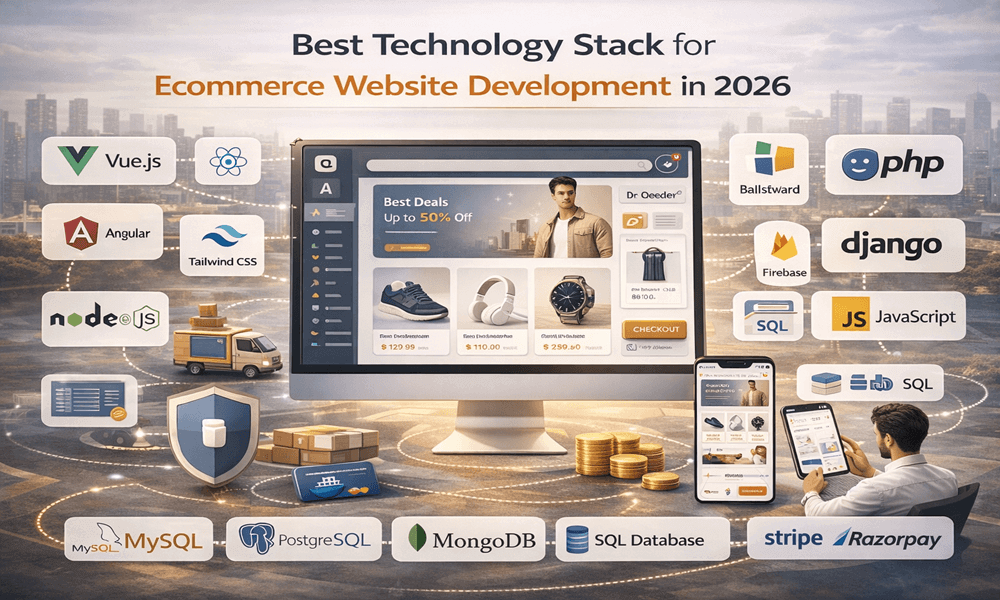
React + Next.js
React continues to dominate ecommerce frontend development due to its flexibility. Next.js adds server-side rendering and improved SEO, making it a strong option for stores that rely on organic traffic.
Benefits:
- Fast page loading
- Better SEO performance
- Smooth user interaction
- Easy integration with APIs
Vue.js and Nuxt
Many developers prefer Vue for its clean structure and lower learning curve. Nuxt improves performance and SEO while keeping development manageable.
Best suited for:
- Mid-sized ecommerce projects
- Businesses wanting faster development cycles
Backend Technologies Powering Ecommerce Platforms
Laravel (PHP Framework)
Laravel remains extremely popular among Indian ecommerce developers because:
- Strong ecosystem
- Cost-effective hosting
- Large developer availability
- Flexible customisation
Ideal for:
- Custom ecommerce platforms
- Marketplace websites
- Scalable admin dashboards
Node.js
Node.js is widely used for real-time ecommerce features such as live tracking, notifications, and high-traffic stores.
Advantages:
- Handles concurrent users efficiently
- Faster API response
- Works well with modern frontend frameworks
Database Choices for Ecommerce
Database selection affects speed and data reliability.
Common combinations:
- MySQL / MariaDB for structured product and order data
- MongoDB for flexible data structures
- Redis for caching and improving performance
Most ecommerce projects use hybrid setups to balance speed and stability.
Headless Commerce Architecture
One noticeable shift in 2026 is the growth of headless ecommerce.
Instead of traditional monolithic platforms, businesses separate frontend and backend layers.
Why businesses prefer headless architecture:
- Faster loading speed
- Freedom to redesign frontend without backend changes
- Easy integration with mobile apps and marketplaces
- Better scalability during high traffic
Payment Gateway and API Integrations
Indian ecommerce stores must support multiple payment options:
- UPI
- Credit/Debit Cards
- Wallet payments
- Buy-now-pay-later services
Razorpay, Cashfree, and Stripe remain common choices due to reliable APIs and easy integration.
Cloud Hosting and Infrastructure
Performance also depends on infrastructure choices.
Popular setups include:
- AWS for enterprise-grade hosting
- DigitalOcean or VPS setups for cost efficiency
- Cloudflare CDN for faster global delivery
A properly configured server can improve loading speed dramatically without changing core development.
Security and Compliance
Security is no longer optional. Ecommerce stores must protect customer data and prevent fraudulent activities.
Important practices include:
- SSL encryption
- Secure API authentication
- Regular backups
- Firewall and bot protection
AI and Automation in Ecommerce (Without Overcomplication)
Instead of overloading sites with heavy AI features, successful ecommerce stores use practical automation such as:
- Smart product recommendations
- Automated email follow-ups
- Inventory alerts
- Behaviour-based offers
Simple implementations often deliver better ROI than overly complex systems.
Choosing the Right Stack for Your Business
There is no single “best” technology stack for every ecommerce website.
Consider:
- Product catalogue size
- Expected traffic
- Integration needs
- Budget
- Long-term maintenance
A small business may succeed with Laravel + MySQL, while a high-scale brand might prefer headless architecture with React frontend and Node.js backend.
Final Thoughts
Choosing the right ecommerce technology is not about following trends—it’s about building a fast, stable, and future-ready platform that can grow with your business. In 2026, search engines and users both reward websites that load quickly, deliver smooth navigation, and provide a hassle-free shopping experience.
For businesses in Bangalore and across India, investing in a scalable and well-structured ecommerce foundation today can save significant time, cost, and technical limitations in the future.
👉 Ready to launch or upgrade your online store? Partner with a trusted eCommerce website development company in Bangalore to build a high-performing, conversion-focused website with the right technology stack and long-term scalability.
Other Blogs
Subscribe
Get the latest blog updates directly in your inbox.